Quick answer: Full-grain leather retains the hide’s natural outer surface and generally offers the greatest opportunity for strength and patina. Top-grain leather is also taken from the upper hide but its surface is corrected or finished to create a more uniform appearance. “Genuine leather” means the material contains real leather, but it does not identify the grain layer, construction or durability. The label alone never proves quality.

Full-grain vs top-grain vs genuine leather
| Term | What it usually describes | Typical advantage | What it does not guarantee |
|---|---|---|---|
| Full-grain | Natural outer grain remains substantially intact | Strength, visible character and patina potential | Good tanning, correct thickness or skilled construction |
| Top-grain | Upper grain layer with some surface correction or finishing | More uniform appearance and controlled hand feel | One universal level of correction or durability |
| Genuine leather | A broad declaration that real leather is present | Can cover many accessible leather products | Grain layer, longevity, finish or premium quality |
| Suede | Velvety surface created from the flesh side or split | Soft texture and visual depth | High resistance to moisture and stains |
| Bonded leather | Leather fibers combined with binders and surface layers | Consistency and lower cost | The structure or aging of intact hide leather |
These descriptions are useful starting points, not a complete ranking system. A well-selected top-grain leather can be more appropriate for a smooth tailored bag than a heavily marked full-grain hide. A poorly tanned or poorly constructed full-grain product can still disappoint. Ask how the material is intended to behave in the finished jacket, bag, belt or wallet.
What is full-grain leather?
Full-grain leather comes from the upper portion of the hide and keeps the natural grain surface rather than sanding it into complete uniformity. Pores, grain variation, healed marks and subtle tonal changes may remain visible. Those details are not automatically defects; they can show that the surface has not been heavily corrected.

Because the dense outer fiber structure remains, full-grain leather is often selected for products expected to endure repeated use. It can develop patina as oils, handling, light and motion influence the surface. Patina should be gradual character—not peeling film, flaking pigment or structural failure.
Full-grain leather may be soft or firm, matte or glossy, lightly protected or highly finished. The words do not tell you the animal species, tanning method, thickness or protective coating. Vegetable-tanned full-grain leather can behave very differently from chrome-tanned full-grain leather. A transparent product specification should identify the relevant details instead of relying on “full-grain” as a complete sales claim.
What is top-grain leather?
Top-grain leather also comes from the upper layer of the hide, but the surface has been corrected to some degree. Correction may remove pronounced marks and create a smoother, more consistent appearance. A finish can then control color, sheen, stain resistance and touch.

There is no single top-grain finish. Some leathers receive light correction while others are more substantially resurfaced. Top-grain leather can be durable, luxurious and appropriate for premium products. Buyers should ask what finish is used, how the surface should be maintained and whether natural color change is expected.
What does genuine leather mean?
“Genuine leather” is a broad composition term. It confirms that the material includes real leather, but it does not tell you whether the leather is full-grain, top-grain or split, nor how the surface was finished. It should not be treated as a precise quality grade.
A genuine-leather product can still be useful when the material, construction and price suit the purpose. The problem begins when the phrase is presented as proof of luxury without further specification. For an informed purchase, look beyond the label to fiber structure, thickness, backing, coating, edge construction, stitching and stress-point reinforcement.
Split leather, suede and bonded leather
After a hide is divided, the lower layer is called a split. Split leather can be finished with a coating or used to create suede. Suede is valued for its soft nap but needs care appropriate to its open, absorbent surface. Bonded leather is made from leather fibers combined with binding materials. It should be identified clearly because its structure and aging differ from an intact leather panel.
None of these materials should be described vaguely when the distinction affects price, maintenance or expected life. Clear language builds more trust than automatically calling every alternative “bad.”
Leather grade is not the same as tanning method
Grain terminology describes the part and surface treatment of the hide. Tanning describes how the hide is stabilized. Vegetable tanning commonly produces structured leather that can develop a pronounced patina. Chrome tanning can provide softness, color range and water tolerance. Combination tanning blends characteristics. Responsible evaluation considers both the grain and the tanning/finishing system.
Thickness and temper matter
Thickness influences protection, structure, weight and sewing requirements. Temper describes how soft or firm the leather feels and how readily it bends. A supple jacket and a structured briefcase require different material behavior even when both use high-quality leather.

Very thick leather is not automatically better. It may be uncomfortable for a fitted jacket or unnecessarily heavy for a daily bag. Very soft leather is not automatically luxurious if the product requires a stable base or reinforced handle anchor. Suitability is the useful standard.
Which leather is best for jackets, bags and wallets?
Leather jackets
Prioritize comfortable temper, clean panel selection, movement, lining and seam construction. Full-grain or top-grain leather may both be appropriate depending on the desired texture and finish. Confirm species and thickness when those details matter.
Leather bags and backpacks
Look at empty weight, handle reinforcement, base structure, zipper installation and how the finish handles everyday contact. A work bag may benefit from a controlled surface; a heritage-style bag may celebrate visible grain and patina.
Leather wallets and cardholders
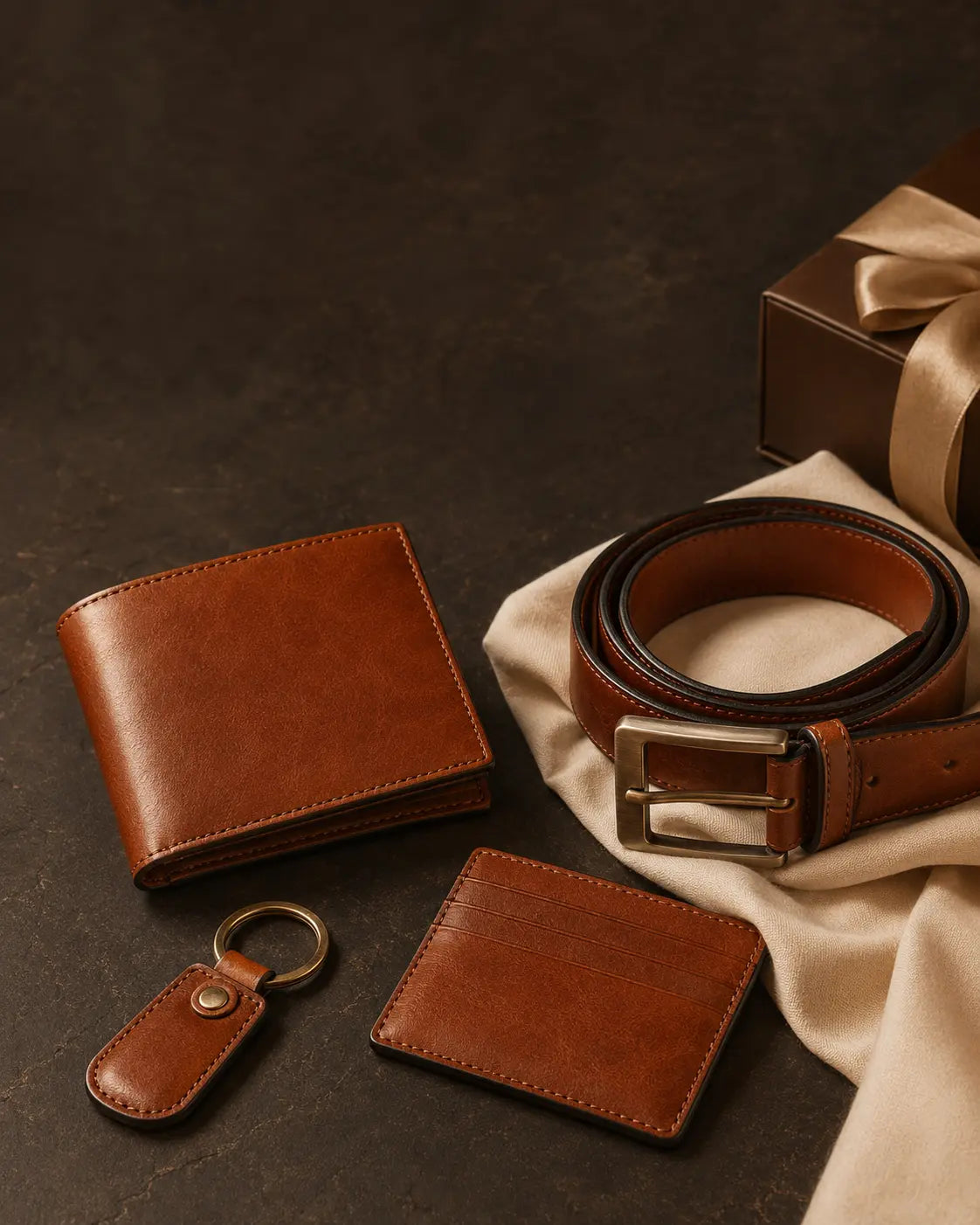
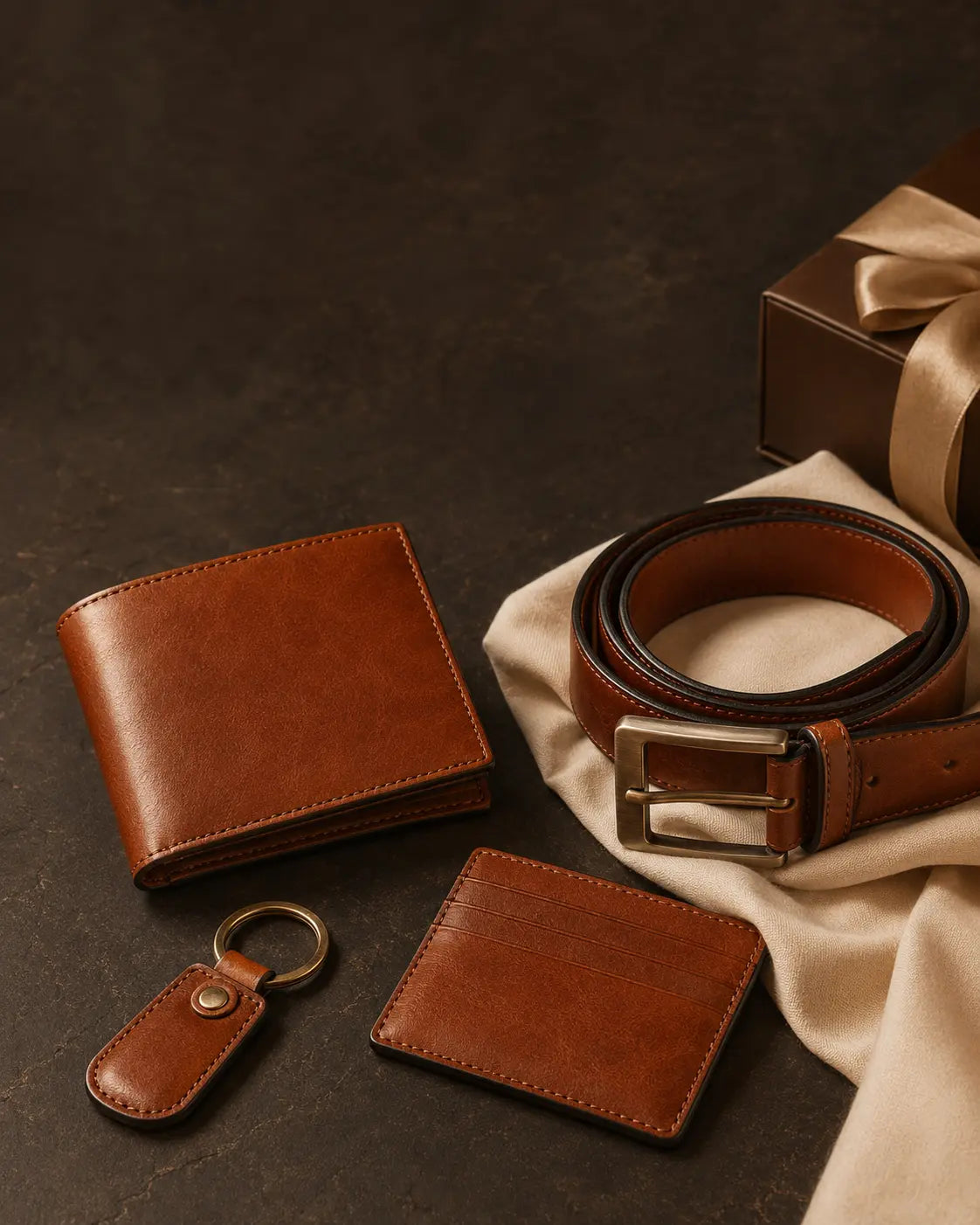
Because layers accumulate quickly, wallet leather must balance strength with manageable thickness. Inspect folded edges, card-slot stitching and whether the interior uses the same declared material.
Leather belts
Belts require lengthwise strength and appropriate resistance to stretching. Confirm whether the strap is one solid layer, lined leather or another construction, and examine holes and buckle attachment.

How to recognize a well-made leather product
- Read the complete specification. Look for leather type, finish, dimensions, lining, hardware and care—not one headline term.
- Inspect useful photographs. Zoom into grain, seams, edges, pocket corners, zipper ends and handle anchors.
- Check consistency without demanding artificial perfection. Natural variation can be expected; unexplained material changes are different.
- Assess construction at stress points. Reinforcement and clean alignment matter more than decorative complexity.
- Match material to use. Consider climate, frequency, carried weight, clothing and exposure to moisture.
- Ask what is verified. Custom options, origin and performance features should be confirmed rather than assumed.
Common leather-buying myths
- “Full-grain is always the softest.” Softness depends on species, tanning, thickness and finishing.
- “Top-grain is fake.” Top-grain is real leather from the upper hide with a corrected surface.
- “Genuine leather guarantees premium quality.” It is too broad to establish quality by itself.
- “Every mark is damage.” Natural grain variation and developing patina can be normal.
- “More shine means better leather.” Shine may come from finishing and does not independently prove fiber quality.
- “The heaviest leather lasts longest.” Appropriate construction and care matter as much as weight.
Explore Wolfoco leather
Review the exact material declaration on the individual product page before ordering. If a specification is not shown, request confirmation rather than relying on a category label.
Shop men’s leather Shop women’s leather Shop leather bags Discuss a custom direction
Selected active products
- Women’s Black Minimalist Moto Jacket
- Women’s Cognac Moto Jacket
- Olive Green and Black Two-Tone Jacket
- Men’s Black and Brown Leather Jacket
Related Wolfoco guides
- How should a leather jacket fit?
- How to clean and condition a leather jacket
- Leather color guide
- How to store leather correctly
- Leather scratches, scuffs and water spots
Frequently asked questions
Is full-grain leather the best leather?
It retains the natural grain and can offer excellent strength and patina, but tanning, thickness, finish, construction and suitability still determine whether it is best for a particular product.
Is top-grain leather real leather?
Yes. It comes from the upper hide, with the surface corrected or finished to some degree.
Is genuine leather fake?
No. The phrase indicates real leather is present, but it is too broad to identify the grain layer or quality.
Does full-grain leather scratch?
It can. Visibility depends on finish, color and use. Some marks blend into patina; deeper damage may require a specialist.
Which leather develops the best patina?
Many minimally coated full-grain leathers develop visible patina, but the specific tanning and finish strongly influence the result.
How can I tell leather quality online?
Use detailed specifications, close photography, construction images, dimensions, care guidance and clear answers from the seller. A single marketing label is insufficient.
What leather is best for a jacket?
Choose a species, thickness and temper that provide the intended drape, protection and comfort. Both suitable full-grain and top-grain leathers can make excellent jackets.
What leather is best for a wallet?
A wallet needs strong leather that remains thin enough when layered. Edge treatment, card-slot construction and stitching are critical.
Editorial standard: Material terms describe categories, not universal guarantees. Confirm the specification attached to the exact Wolfoco product before ordering.