
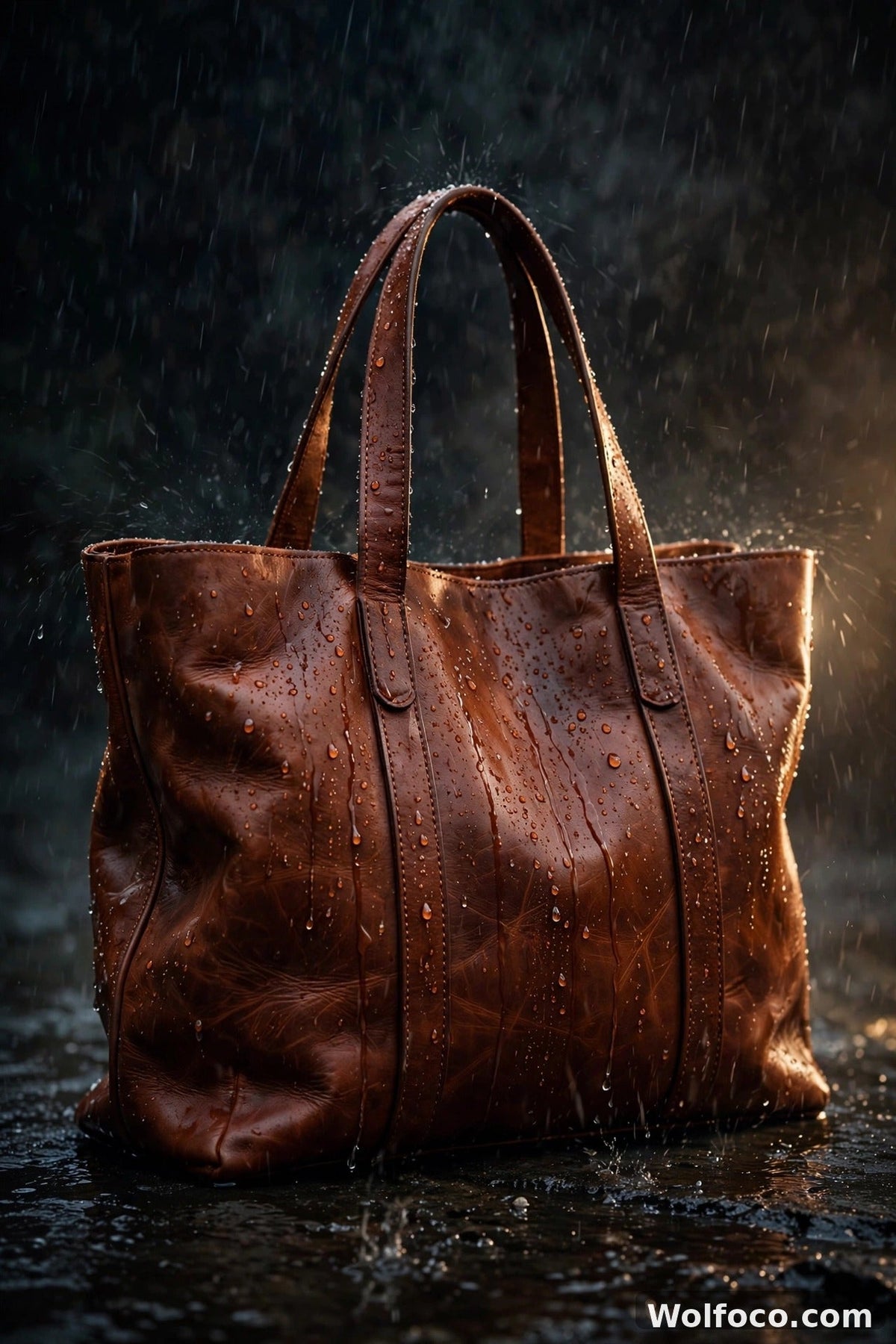

Quick answer: If your leather bag got wet, act in the first 10 minutes: empty it completely, blot (never rub) with a dry cloth, stuff it firmly with tissue paper to hold its shape, and stand it upright in a ventilated room away from heat. No hair dryers, no direct sun. Once fully dry, condition the leather. The full protocol is below.
It happens in seconds. A downpour catches you between the car and the door. A water bottle leaks inside your tote. Someone knocks a drink over at dinner. And now your leather bag — the good one — is wet, and your stomach drops.
Here's the good news: a wet leather bag is almost never ruined on the spot. What ruins bags is what happens in the hours after they get wet — wrong drying, no shape support, forgotten damp linings. Bags are more vulnerable than jackets in one specific way: they can lose their shape permanently if they dry while slumped. That is the emergency you're actually racing.
This guide is built for the panic moment. Start with the 10-minute checklist, then work through the full recovery below.
The 10-Minute Action Checklist
Do these in order, right now:
- Empty everything out. Every pocket, every compartment. Wet contents keep the lining damp for days.
- Blot, don't rub. Press a dry, soft cloth against the wet leather. Rubbing pushes water deeper into the grain.
- Open it up. Unzip every zipper, unbuckle every strap. Air needs to reach the lining.
- Stuff it. Fill the bag firmly with dry tissue paper or a clean cotton towel — not newspaper (the ink transfers). This is the single most important step for bags.
- Stand it upright. Set the stuffed bag on a dry towel in a ventilated room, away from radiators, hair dryers, and direct sun.
That's the triage. Now the full recovery, because each part of a bag needs slightly different care. One thing to know first: a jacket hangs and dries in its natural shape, but a bag doesn't — it's a soft structure, and wet leather is pliable leather. That leaves bags with three risks jackets mostly avoid: shape loss (the big one), hardware water spots, and lining mildew. The protocol below handles all three.
Step 1: Save the Shape (The Stuffing Protocol)
Wet leather stretches and sags under its own weight. Your job is to give the bag its shape back before it dries into the wrong one.

Stuff the bag firmly with tissue paper so it holds its intended shape while drying.
Fill the main compartment until the bag holds the silhouette it had when you bought it — firm but not bulging. Tuck smaller rolls of tissue into side pockets and gussets so corners don't collapse inward. If the bag has a structured base, make sure the bottom sits flat. Check the stuffing after a few hours: damp tissue wicks moisture out of the leather, so replace it once with dry paper if it feels wet. That one swap pulls a surprising amount of water out of the bag.
Step 2: Dry It Slowly and Upright
Leather dries best the boring way: room temperature, moving air, patience. A stuffed bag typically needs 24 to 48 hours to dry fully — the lining is always the last part to finish, so don't rush the verdict.

Air-dry the stuffed bag upright in a ventilated room — never with heat.
Stand the bag upright on a dry towel. A room with gentle airflow is ideal — near (not in front of) an open window, or in a room with a fan running on low. Rotate the bag once or twice during drying so no single side stays pressed against a surface. And leave the zippers open the whole time: trapped humid air inside a closed bag is how lining mildew starts.
Step 3: Handle the Hardware
Zippers, clasps, buckles, and bag feet are where water leaves its most visible marks. Mineral deposits in water spot brass and nickel, and damp hardware pressed against leather can leave dark transfer marks.

Water spots show first on hardware — dry each piece individually.
While the bag is still damp, wipe each piece of hardware dry with a separate corner of your cloth — don't drag the same wet section across the leather. Open and close zippers a few times while they dry so they don't stiffen in place. If spots appear on metal after drying, a gentle metal polish on a soft cloth takes them off; keep polish off the leather itself.
Step 4: Rescue the Lining
The lining is the part everyone forgets, and it's where mildew starts. Fabric linings hold moisture against the inside of the leather long after the outside feels dry — and a musty lining will make the whole bag smell.

Press a dry cloth into the lining — it's the slowest part to dry.
Pull the lining outward where you can and press a dry cloth into it, especially along seams and the bottom corners where water pools. If the lining still smells damp after the bag feels dry, leave the bag open overnight near airflow, or tuck a small breathable sachet of baking soda inside for a day (don't let powder touch the leather directly). For the full odor-removal protocol, see our guide on getting musty smells out of leather.
Step 5: Condition Once Fully Dry
Water strips natural oils from leather as it evaporates. That's why a bag that air-dried "fine" can feel stiff or look dull a week later. Once the bag is dry inside and out — the lining included — apply a light coat of leather conditioner with a soft cloth, working in small circles. Let it absorb for 20 minutes, then buff gently.

A simple care kit — conditioner, soft cloths, tissue paper — covers most wet-bag emergencies.
One thin coat is enough. Over-conditioning a bag that's just recovered from water exposure can darken the leather unevenly, especially on lighter hides.
What NOT to Do to a Wet Leather Bag
- No hair dryers, radiators, or heaters. Heat cooks wet leather — it stiffens, cracks, and shrinks. This is the #1 way people turn a rescue into a ruin.
- No wringing. Never twist a bag to squeeze water out. You'll stretch the handles and distort the shape permanently.
- No direct sun on dark leather. Sun dries the surface far faster than the lining, and the uneven drying causes warping and fading.
- No plastic bags. Sealing a damp bag in plastic traps humidity and grows mildew. Breathable air only.
- Don't hang it by the handles while wet. Wet leather stretches — hang the bag by its body or lay it flat, never by straps under load.
- Don't condition while damp. Conditioner seals moisture in. Dry first, condition second.
Caught in the rain more than once? A full-grain leather bag handles weather better than anything else you can carry — the dense grain shrugs off water that would ruin lesser bags. Start with the Genuine Leather Tote or the Burgundy Leather Backpack.
When to call a professional: most wet bags recover fully at home, but see a leather specialist if dye bleeds across large areas, the leather feels papery or cracked after drying, or a sour smell persists after two days of airing — those signal damage below the surface. And if this isn't your first rescue, consider prevention: a water-repellent leather spray (tested on a hidden spot first) before rainy season, and proper storage between uses, does more than any emergency protocol.
For the jacket version of this rescue — same principles, different shape risks — see what to do when your leather jacket gets wet.
Frequently asked questions
Can a leather bag be ruined by rain?
Rarely. Rain alone almost never ruins a quality leather bag — what ruins bags is heat-drying, drying without shape support, or ignoring a damp lining. A bag rescued with the stuffing-and-air-dry protocol above usually recovers completely.
How do you dry a leather bag fast without damaging it?
Honestly: you don't rush it. The fastest safe method is stuffing the bag with tissue paper (replaced once when damp), standing it upright in a room with gentle airflow, and keeping all zippers open. Expect 24 to 48 hours. Any heat-based shortcut risks cracking and warping.
How do I keep my leather bag from losing its shape after getting wet?
Stuff it firmly with dry tissue paper or a clean cotton towel while it's still damp, so it dries in its intended silhouette. Never let a wet bag dry slumped on its side, and never hang it by the handles while wet — the stretched leather won't spring back.
Will water stains come out of a leather bag?
Light water spots on full-grain leather often fade as the bag dries evenly, and conditioning afterward blends them further. For stubborn spots, lightly dampen the entire panel (not just the spot) so it dries uniformly — spot-treating one area is what creates visible rings.
Can I use a hair dryer on a wet leather bag?
No. Heat is the single most damaging thing you can do to wet leather — it stiffens, shrinks, and cracks the grain. Room-temperature air drying is slower but it's the only safe method.
How do I stop my leather bag from smelling musty after rain?
The smell comes from a damp lining, not the leather itself. Keep the bag open in ventilated air until the lining is fully dry, and if odor lingers, seal the empty bag overnight with an open bowl of baking soda nearby (not touching the leather), then condition.
Your bag survived the rain — make the next one easier. Full-grain leather, solid hardware, and a structured build are what separate a bag that shrugs off weather from one that doesn't. Browse the Wolfoco leather bag collection →

