
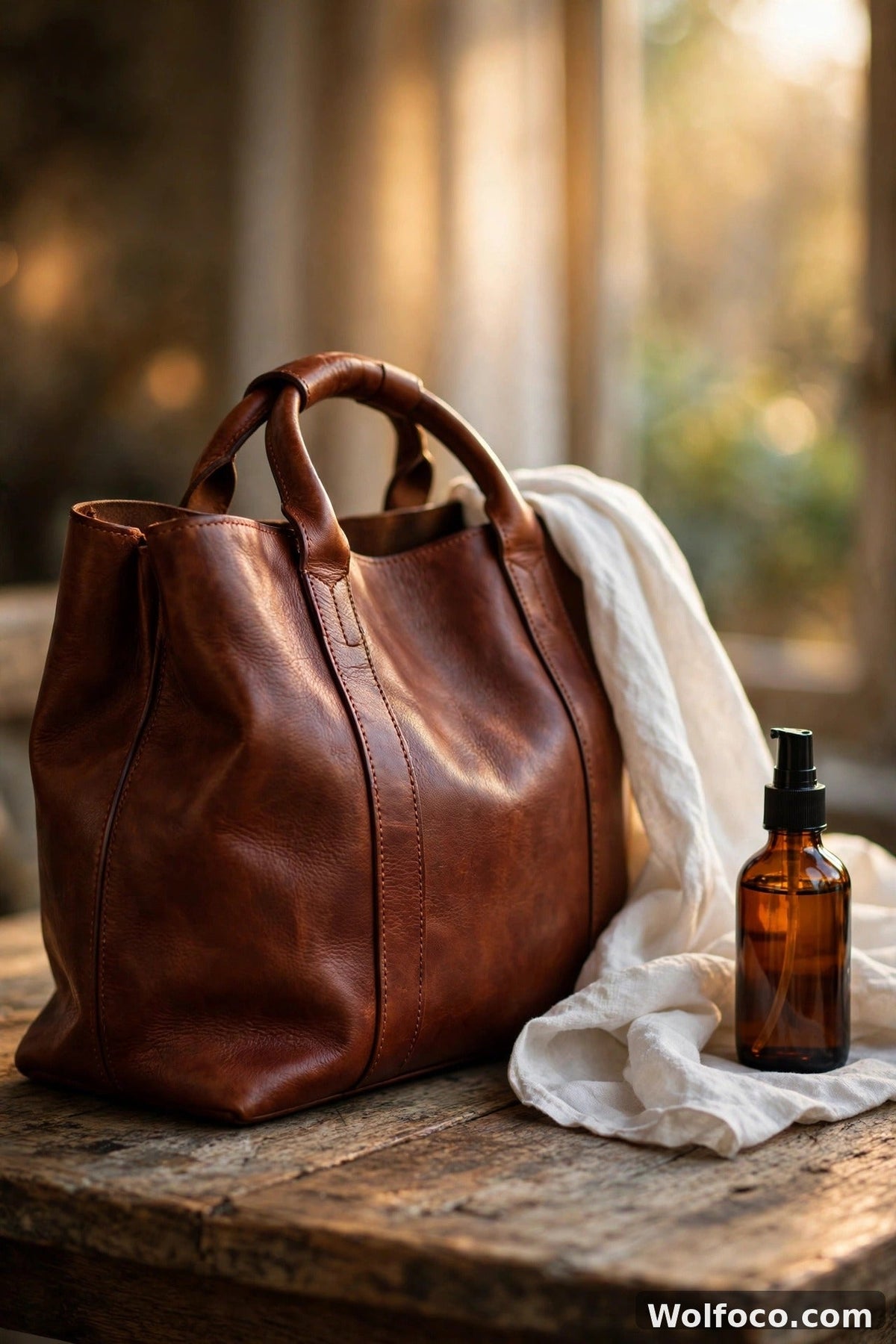

Quick answer: To clean a leather bag, empty it, dust the exterior with a dry soft cloth, then wipe it with a barely-damp cloth and a drop of mild soap. Clean the lining separately, polish hardware with a dry cloth, and finish with conditioner. Never soak it, never use bleach, and always air-dry away from heat.
There's a moment every leather bag owner knows. You reach for your favorite tote, the one that goes with everything, and you notice it: the handles have gone dark and sticky, there's a smudge along the bottom you don't remember making, and the inside smells faintly of the granola bar that melted in there last summer.
Here's the thing most cleaning guides get wrong — they treat a bag like a jacket. A jacket is one big surface. A bag is a small machine: exterior panels, a lining that traps everything, straps under constant tension, metal hardware, and painted edges that chip. Each part needs its own treatment. This is the bag-specific protocol, part by part.
What you'll need: a couple of soft, clean cloths (microfiber is ideal, an old cotton T-shirt works), a small soft brush or old toothbrush, mild soap (saddle soap or a drop of gentle dish soap), white vinegar for stubborn spots, and a quality leather conditioner. That's it — everything else is technique.
Step 1: Empty and Prep the Bag
Turn the bag fully inside out if the lining allows it, or at least pull the lining up and out as far as it goes. Shake out every crumb, receipt, and pen cap. Go over the exterior with a dry cloth to lift surface dust — you'd be surprised how much of "dirty leather" is just dust sitting on top. If your bag has a structured shape, stuff it loosely with clean cloth or tissue paper now; it keeps the panels from collapsing while you work and helps it hold its shape while drying later.
Step 2: Clean the Leather Exterior

Wipe in gentle circles with a barely-damp cloth — the leather should never look wet.
Dampen your cloth, wring it until it's barely moist, and add the smallest drop of mild soap. Work one panel at a time in gentle circles, rinsing the cloth as you go. The leather should look slightly darkened while you work and dry back to its normal color within minutes — if it stays dark, your cloth is too wet.
Pay extra attention to the bottom corners and the back panel where the bag rubs against your body; that's where grime concentrates. For scuffs, a little extra pressure with the damp cloth usually lifts them. For ink or dye transfer (the blue shadow jeans leave on light bags), dab — don't rub — with a cloth barely touched with white vinegar, then wipe clean immediately.
Step 3: Clean the Lining (Everyone Skips This)

The lining traps crumbs, spills, and odors — pull it out and clean it like its own small garment.
The lining is where bags actually get gross. Fabric linings can usually handle a cloth dampened with mild soapy water — wipe the whole surface, then go over it again with a clean damp cloth to lift the soap. For leather linings, use the same barely-damp method as the exterior, no soap needed.
Smells live in the lining. If yours has picked up an odor, sprinkle a little baking soda inside, leave the bag open overnight, and shake it out in the morning. It absorbs odors without touching the leather. For more on banishing stubborn smells from leather goods, see our guide to getting musty smells out of leather — the same principles apply to bags.
Step 4: Straps, Handles, and Hardware

Handles darken from hand oils — they need the most frequent attention of any part.
Handles and straps take the most abuse on any bag. Hand oils darken them over time, and the constant flexing where they meet the bag body collects grime in the creases. Clean them with the same damp-cloth method, getting into the folds with the soft brush. If the handles have gone noticeably darker than the rest of the bag, that's usually oil buildup, not damage — a thorough wipe followed by conditioner often evens it out.
For metal hardware — zippers, clasps, studs, feet — a dry cloth is usually enough. Tarnished brass or nickel can be brightened with a dedicated metal polish applied with a cotton swab, keeping it off the leather. Work the zippers back and forth a few times after cleaning; a tiny dab of zipper wax or even a graphite pencil along the teeth keeps them gliding.
Step 5: Edge Paint and Stitching

Clean edges with a light touch — aggressive rubbing is what chips edge paint.
The painted or burnished edges along straps and panel seams are the most delicate part of a bag's finish. Wipe them gently with a dry or barely-damp cloth — never scrub, because that's exactly how edge paint chips and peels. If you spot small chips, a matching leather edge paint pen (available at any leather craft shop) can touch them up; apply thin coats and let each dry fully.
Check the stitching while you're here. Loose threads should be trimmed, not pulled. If a seam is opening, take it to a cobbler or leather repair shop sooner rather than later — a small restitch is cheap, a torn panel is not.
Step 6: Condition and Protect

Conditioning is what keeps leather supple — cleaning without it slowly dries the hide out.
Cleaning strips a little of the leather's natural oils every time, so conditioning afterward isn't optional — it's the other half of the job. Apply a thin, even layer of leather conditioner with a soft cloth, working it into the panels, straps, and handles. Less is more; you can always add a second light coat, but an over-conditioned bag feels greasy and attracts dust.
Let it absorb for 20–30 minutes, then buff off any excess with a clean dry cloth. The leather should feel supple and look richer, not shiny or slick. Condition every 3–6 months depending on use — more often for daily-carry bags, less for occasional ones. Our full leather conditioning guide covers conditioner types and the "does it need it?" tests in detail.
A bag worth caring for is a bag worth owning.
Our full-grain leather bags — like the Genuine Leather Tote — are built to be cleaned, conditioned, and carried for decades, not replaced every season. Shop leather bags →
What NOT to Do
This is where most bag-cleaning disasters happen, so read it twice. Never soak a leather bag or run it under a tap — water saturates the internal structure, warps stiffeners, and can leave permanent water marks. Never use bleach, all-purpose cleaners, baby wipes, or alcohol-based hand sanitizer; they strip dyes and dry the leather aggressively.
Never dry a bag with a hair dryer, radiator, or direct sunlight. Heat shrinks and cracks leather faster than almost anything. Never put it in a washing machine — yes, people do this, and yes, it ruins the bag. And never store a freshly cleaned bag in plastic; leather needs to breathe, so use the cloth dust bag it came with or a cotton pillowcase.
How often should you clean it? A quick dry-cloth dusting once a week takes thirty seconds and prevents most buildup. A proper clean-and-condition every three to six months keeps the leather healthy for years. Bags you carry daily in all weather sit at the three-month end; an evening clutch you use twice a year might need it annually.
The real secret is storage between uses. Stuff the bag to hold its shape, keep it in its dust bag, and store it upright in a cool, dry spot — never crammed on a closet floor. Our storage guide for leather jackets and bags walks through the full setup that prevents most cleaning emergencies before they start.
Frequently asked questions
Can I use soap and water on a leather bag?
Yes, with restraint. A barely-damp cloth with a drop of mild soap is safe for finished leather — the key word is barely. The cloth should feel cool and slightly moist, never wet enough to drip. Wipe, don't soak, and condition afterward to replace the oils the soap lifted.
How do you clean the inside of a leather bag?
Pull the lining out as far as it goes and wipe fabric linings with a cloth dampened with mild soapy water, then again with a clean damp cloth. For leather linings, use the same barely-damp method as the exterior with no soap. Sprinkle baking soda inside overnight to absorb odors, then shake it out.
How do you get stains out of a leather bag?
For surface dirt and scuffs, a damp cloth with mild soap handles most of it. For dye transfer (like denim marks on light leather), dab gently with white vinegar on a cloth and wipe clean immediately. For grease spots, cover with cornstarch or talcum powder overnight to draw the oil out, then brush off. Deep or set-in stains may need a professional leather cleaner.
Can you machine wash a leather bag?
No — never machine wash a leather bag. The agitation, water saturation, and detergent destroy the leather's structure, warp internal stiffeners, and can permanently damage dyes and hardware. Hand cleaning is the only safe method.
How do you clean leather bag straps and handles?
Handles darken from hand oils, so clean them with a damp cloth and mild soap, working into the creases where straps meet the bag with a soft brush. Follow with conditioner — handles are high-flex areas and dry out faster than flat panels. This is the part of the bag that benefits most from regular conditioning.
Should I condition my leather bag after cleaning?
Yes, always. Cleaning removes some of the leather's natural oils along with the dirt, and skipping conditioner leaves the hide progressively drier and more crack-prone with each cleaning. Apply a thin coat, let it absorb 20–30 minutes, and buff off the excess.
A leather bag rewards the ten minutes you give it. Clean it part by part, condition it after, store it properly — and it'll outlast every trend cycle it sees. Browse our full-grain leather bags, from everyday totes to the Burgundy Leather Backpack →

