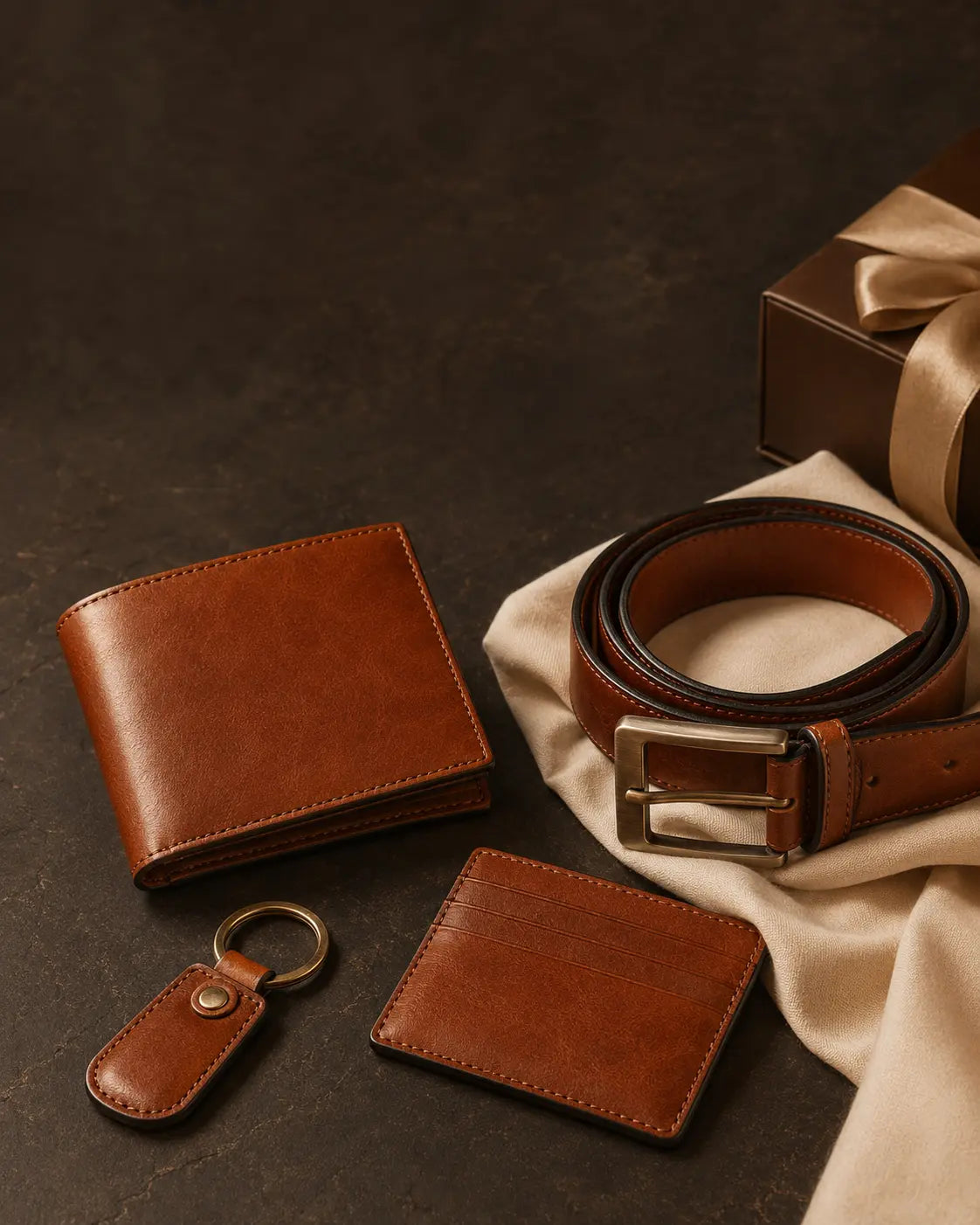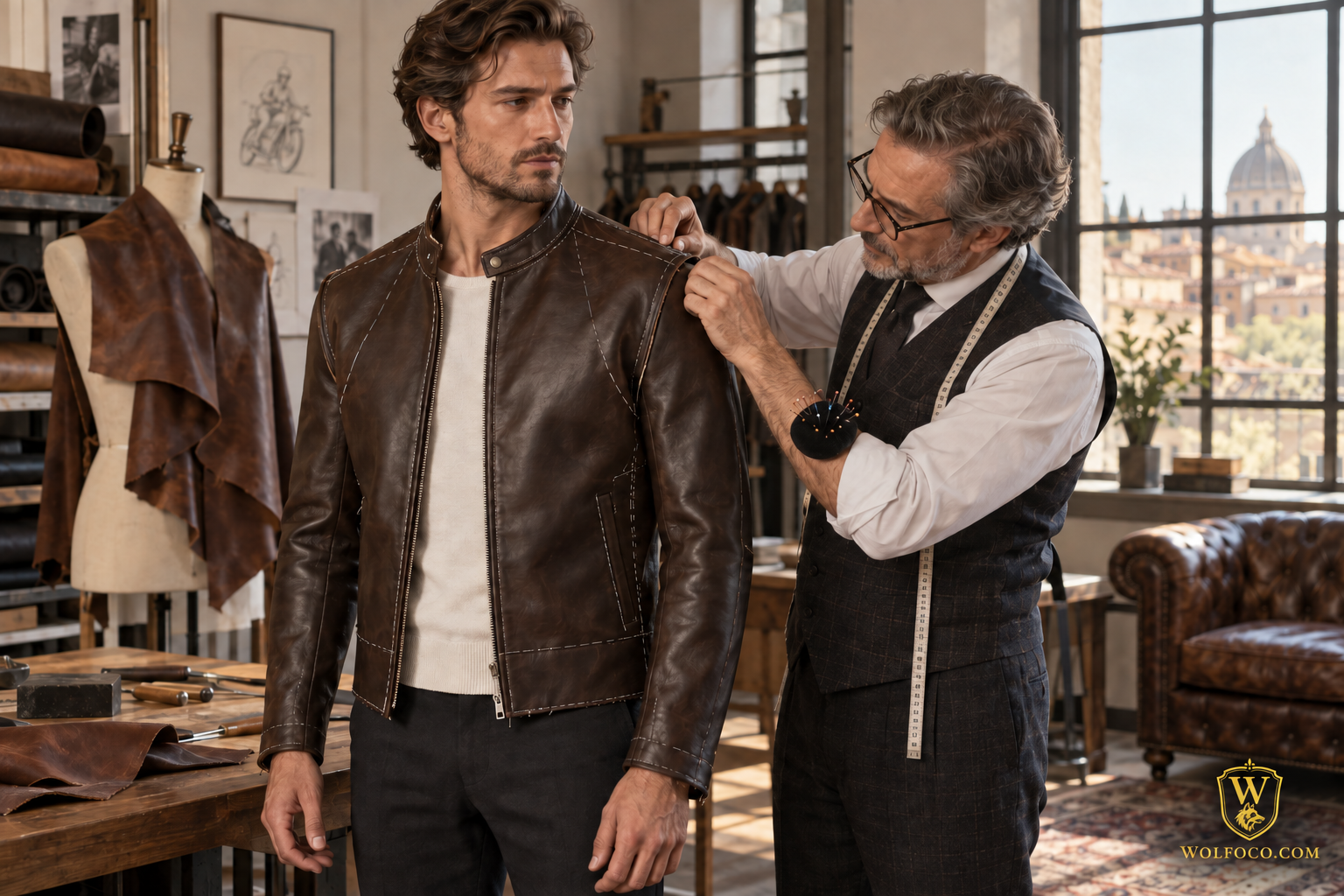
Quick answer: A successful custom leather jacket order needs three things: accurate body and garment measurements, a written specification covering every visible component, and approval checkpoints before cutting. “Custom” should never mean guessing. Confirm fit preference, leather, color, lining, hardware, pockets, length, production time, alteration policy and return terms in writing.

Custom leather jacket ordering process
| Stage | Your decision | Written confirmation |
|---|---|---|
| 1. Brief | Style, use and desired fit | Reference front, back and detail views |
| 2. Measurements | Body and comparison-jacket dimensions | Units, method and measuring person |
| 3. Materials | Leather, color, lining and hardware | Named selections or approved swatches |
| 4. Specification | Length, collar, pockets, cuffs and closures | Final specification sheet |
| 5. Approval | Resolve every open question | Written authorization before cutting |
| 6. Delivery | Inspect fit and workmanship promptly | Report issues within the stated window |
Decide how you want the jacket to fit
“Slim,” “regular” and “relaxed” are not measurements. Explain what will be worn underneath and where you want ease. A close cafe racer over a T-shirt needs different allowance from a winter jacket worn over knitwear. Review our complete leather jacket fit guide before choosing.

Body measurements versus garment measurements
Body measurements describe the wearer. Garment measurements describe the finished jacket laid flat or measured along specific seams. They are not interchangeable because the finished garment includes ease. A strong process uses both: accurate body dimensions plus measurements from a jacket that already fits well.
- Chest and waist circumference
- Shoulder width using the specified landmarks
- Back and front length from the agreed starting point
- Sleeve length with the arm naturally positioned
- Bicep and wrist circumference
- Height and relevant posture notes
Use the exact method supplied by the maker. Record inches or centimeters clearly and never convert from memory.
Create one complete specification

The final specification should state leather type and finish; color; thickness or weight where relevant; lining; zipper and snap finish; collar; pocket quantity and placement; cuff construction; hem treatment; sleeve and body length; monogram details; and any motorcycle or protective requirements. A fashion jacket should not be described as protective riding equipment unless it is designed and verified for that purpose.
Approve before the leather is cut
Leather is not as forgiving to alter as many woven fabrics because removed stitches can leave holes. Resolve inconsistencies before cutting. Ask the maker to summarize the order in one final written specification rather than relying on scattered messages.

Fit check when the jacket arrives
- Try it on with the layer specified during ordering.
- Zip it without forcing the front closure.
- Check the shoulder seam and collar position.
- Move both arms forward and overhead gently.
- Confirm cuff and body lengths.
- Photograph any concern immediately in neutral posture.
New leather can feel structured, but break-in should not be used to excuse a wrong shoulder position, severe chest strain or unusable sleeve length.

Questions to ask before paying
- Which measurements are body measurements and which are garment measurements?
- Who is responsible for checking inconsistencies?
- Will I approve a final specification before cutting?
- What substitutions are permitted?
- What is the estimated processing time?
- What happens if the finished measurements differ from the approved specification?
- What are the alteration, cancellation and return terms?
Frequently asked questions
Should I size up for a custom jacket?
Do not apply an arbitrary size-up rule. State your intended layers and fit preference; the maker should translate body measurements into appropriate garment ease.
Can I copy a celebrity jacket?
You can describe general style features, but avoid protected logos and exact proprietary artwork. Use references to clarify silhouette while creating an original specification.
How many measurements are needed?
The count depends on design and method. Accuracy and consistent landmarks matter more than collecting many unexplained numbers.
Can a custom leather jacket be returned?
Terms vary and often differ from standard products. Read and save the policy before approving production.
How long should production take?
There is no universal time. Obtain the current estimate and understand whether it begins before or after specification approval.
Start responsibly: review Wolfoco custom orders, browse men’s leather and women’s leather, and compare men’s jacket styles.