
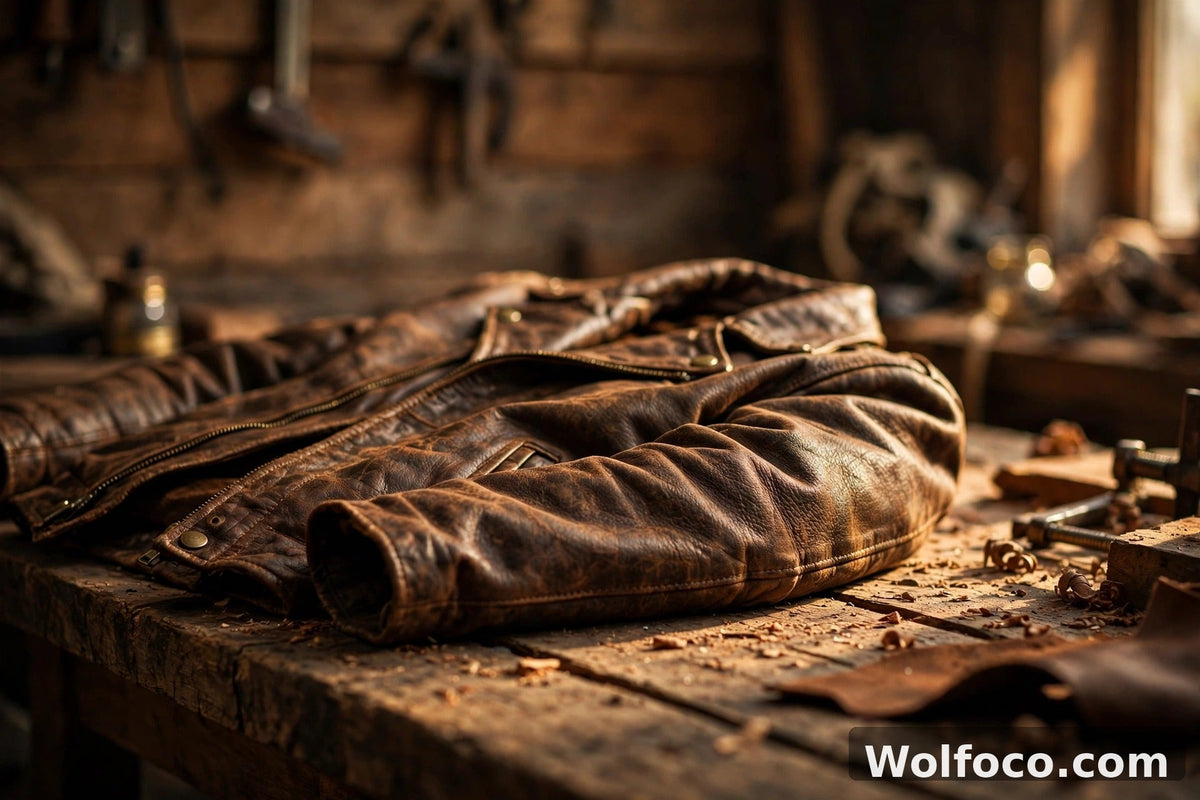

Quick answer: Goatskin is lighter, naturally supple, and water-resistant thanks to its lanolin-rich fibers — it breaks in fast and suits everyday jackets. Cowhide is thicker, stiffer, and more structured, developing a deep patina over years. Neither wins outright: choose goatskin for comfort and weather resistance, cowhide for structure and rugged character.
Walk into any serious leather jacket shop and you'll eventually face the same fork in the road: the soft, pebble-grained goatskin jacket that feels broken-in on day one, or the stiff, heavy cowhide one that fights you for a month and then becomes the best thing you own.
Salespeople rarely explain what you're actually choosing. The hide determines how the jacket drapes, how it survives rain, how long the break-in takes, and how it looks five years from now. Get it wrong and you end up with a jacket that never quite feels like yours. Get it right, and it becomes a second skin.
Here's the honest, side-by-side comparison — no winner declared, because the right answer depends on you.
What goatskin actually is
Goatskin comes from — no surprises — goats, and it's been used for gloves, boots, and jackets for centuries. Its structure is what makes it special: the fibers are tightly packed, which gives it surprising strength for its weight, and the skin contains natural lanolin oils that make it supple and water-resistant without heavy treatment.
You can spot goatskin by its grain: a fine, natural pebble that's irregular and organic. No two hides match, which is part of the charm. Garment-weight goatskin usually runs about 0.6 to 1.0 millimeters thick, so jackets cut from it are noticeably lighter than their cowhide equivalents.
In practice, a goatskin jacket feels comfortable almost immediately. There's a short settling-in period — days, not months — and then it moves with you.

Look closely: goatskin's fine natural pebble grain versus cowhide's broader, smoother grain.
What cowhide actually is
Cowhide is the workhorse of the leather world — the most common hide in jacket-making, and the reason most of us picture when someone says "leather jacket." It's thicker, denser, and initially stiffer than goatskin, usually cut between 1.0 and 1.3 millimeters for garments.
That thickness is both the appeal and the commitment. A new cowhide jacket can feel like armor for the first few weeks. It creases at the elbows and shoulders, softens slowly, and over years develops a rich patina — darkened high-wear areas, softened folds — that no artificial finish can replicate. This is the jacket that looks better at year ten than year one.
If you've ever envied someone's vintage jacket with that lived-in glow, it was almost certainly cowhide.
Head-to-head: the scored comparison
Here's how the two hides stack up across the things that actually matter when you're buying a jacket. Scores are out of 10.
| Category | Goatskin | Cowhide |
|---|---|---|
| Out-of-the-box comfort | 9 — soft within days | 5 — needs real break-in |
| Break-in time | 9 — days to weeks | 6 — weeks to months |
| Abrasion resistance | 8 — strong for its weight | 9 — thicker hides win |
| Water resistance | 8 — natural lanolin oils | 6 — needs conditioning |
| Weight / wearability | 9 — light, easy all day | 6 — substantial feel |
| Patina over time | 6 — ages gracefully, subtly | 10 — the patina champion |
| Structure / drape | 6 — drapes, relaxed fit | 9 — holds sharp lines |
| Price (typical jacket) | 7 — often slightly pricier | 8 — abundant supply |
Style-wise, the hides have natural homes too. Goatskin's soft drape flatters relaxed silhouettes — bombers, Harringtons, shirt-jackets. Cowhide's structure suits pieces that need to hold a line — bikers, café racers, double-breasted aviators. Neither rule is absolute, but it's a useful starting point when browsing.
On price, cowhide benefits from sheer supply: cows are everywhere, so good cowhide jackets are often the better value. Goatskin hides are smaller — more hides and more cutting waste per jacket — which can nudge prices up, though the difference is usually modest.
Abrasion resistance: the rider's question
If you ride, this is the category you care about most. Here's the nuance most guides skip: goatskin is remarkably abrasion-resistant for its thickness — its tight fiber structure resists tearing, which is why it's the traditional choice for motorcycle racing gloves.
But physics is physics. Cowhide cut thick (1.2mm and up) simply has more material to sacrifice in a slide. For street riding in a fashion jacket, well-made goatskin holds its own. For dedicated protective gear, thicker cowhide remains the standard.

A scuffed hide next to untouched leather — how a jacket's surface handles hard wear.
Suppleness and break-in: days versus months
This is the biggest practical difference you'll feel. A goatskin jacket is wearable-comfortable almost immediately. The leather is naturally pliable, so it conforms to your shoulders and arms within days of regular wear.
Cowhide demands patience. Expect stiffness through the shoulders and a boxy feel for the first few weeks. The standard break-in routine — wearing it daily, flexing the arms, letting body heat do the work — applies fully here. (Our break-in guide walks through speeding this up safely.) The payoff is a jacket molded precisely to your body.

The bend test: supple hides fold without resistance; stiff hides fight back.
Water resistance and weather
Goatskin's hidden superpower is its natural lanolin content — oils in the fibers that repel water. Light rain beads up and rolls off a goatskin jacket with minimal fuss. It won't survive a downpour, but for drizzle and damp commutes, it's the more forgiving hide.
Cowhide absorbs water more readily and needs regular conditioning to stay weather-ready. If you get caught in rain in either hide, the protocol is the same — dry slowly at room temperature, never with heat. See what to do when your leather jacket gets wet for the full rescue routine.

Light rain beading on leather — goatskin's natural lanolin gives it an edge here.
Want to feel the difference yourself?
The honest verdict: which hide for which person

Two philosophies: soft, ready-to-wear comfort versus structured, built-to-age character.
Choose goatskin if: you want comfort from day one, you wear your jacket daily and travel with it, you live somewhere damp, or you prefer a relaxed drape over sharp structure.
Choose cowhide if: you want a jacket that ages into something unique, you love structured silhouettes like bikers and café racers, you ride and want maximum material between you and the road, or you enjoy the ritual of breaking something in properly.
And if you're still torn? Goatskin is the safer first premium jacket — it's forgiving, comfortable, and easy to wear. Cowhide is the better second jacket, bought with intention once you know exactly what silhouette and patina you're after.
What NOT to do when choosing
Don't pick a hide based on a single product photo — grain and drape don't translate through screens. Don't assume "thicker is better" without considering how you'll wear it; a heavy cowhide jacket you leave in the closet loses to a goatskin one you live in. And don't pay a premium for an exotic-sounding hide name without checking what you're actually getting — which brings us to the questions everyone asks.
Frequently asked questions
Is goatskin leather good for jackets?
Yes — it's one of the best jacket hides. It's lightweight, naturally supple, water-resistant thanks to lanolin oils, and abrasion-resistant for its thickness. It breaks in within days rather than months, making it ideal for everyday wear and travel jackets.
Is cowhide better than goatskin?
Neither is universally better. Cowhide is thicker and more structured, develops a richer patina, and offers more material in abrasion scenarios. Goatskin is lighter, softer from day one, and more water-resistant. Choose based on whether you value comfort or character more.
Which lasts longer, goatskin or cowhide?
With proper care, both last decades. Cowhide's thickness gives it an edge in raw longevity for heavy-duty use, while goatskin's tight fiber structure resists tearing remarkably well. In practice, construction quality and maintenance matter more than the hide choice.
Why are goatskin jackets sometimes more expensive?
Goat hides are smaller than cowhides, so more hides (and more cutting waste) go into a single jacket. Supply is also more limited. The price difference is usually modest, not dramatic.
Does goatskin leather crack or peel?
Genuine goatskin doesn't peel — peeling is a sign of bonded leather or a failing surface coating, not the hide itself. If a "goatskin" jacket is peeling, check whether it's actually genuine leather using our fake leather spotting guide or read why leather jackets peel.
How does lambskin compare to goatskin and cowhide?
Lambskin is softer and more luxurious-feeling than both, but also more delicate — it's the dress-shirt of jacket hides. We compare it directly against cowhide in cowhide vs lambskin, and explain leather grades in full-grain vs top-grain vs genuine leather.
Still deciding? Browse the men's leather jacket collection — from the everyday Men's Black Leather Jacket to the character-rich Men's Brown Leather Jacket — and pick the hide that matches how you'll actually live in it.

