
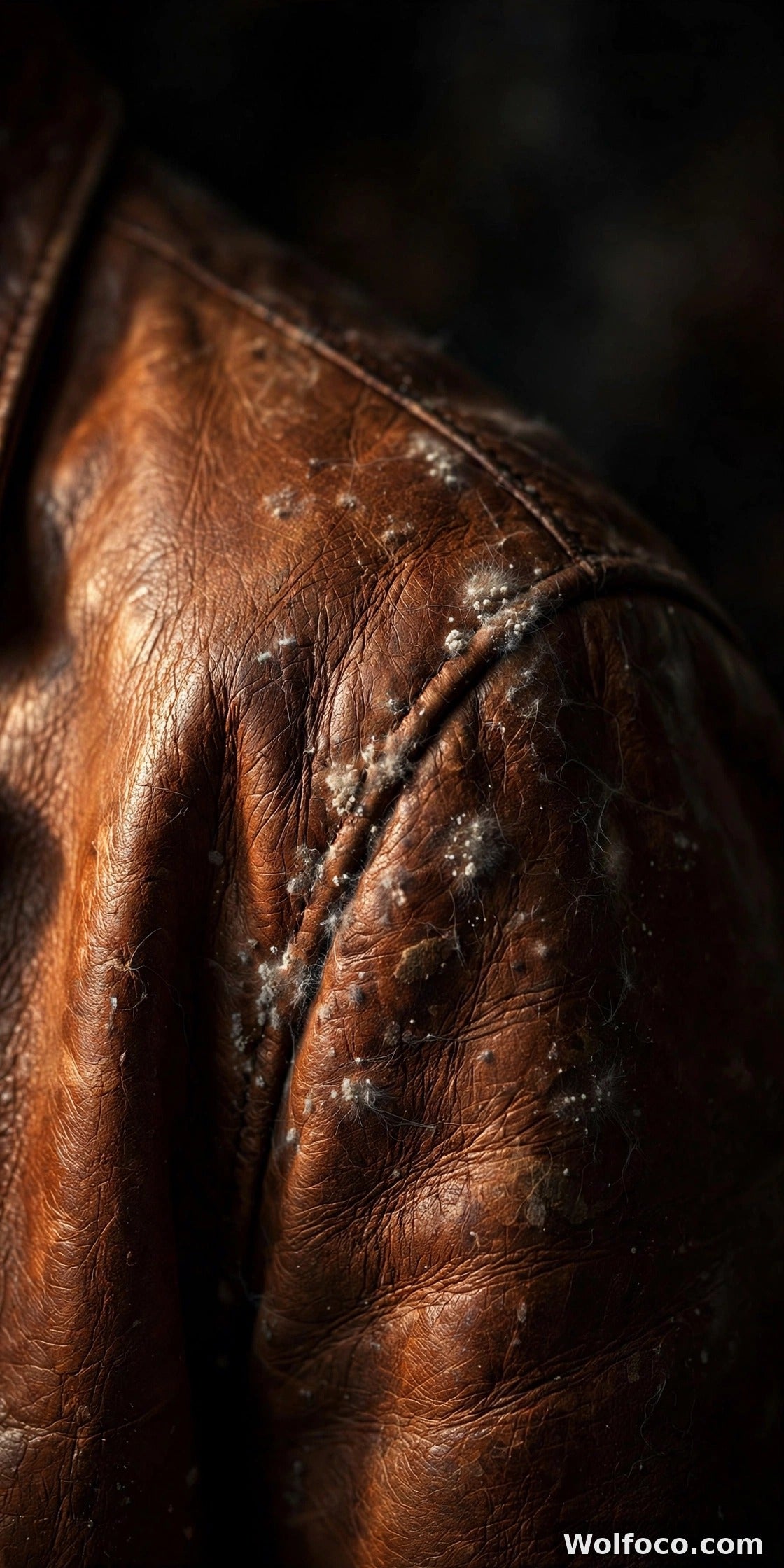

Quick answer: To clean mold off a leather jacket, isolate it outdoors, brush off surface mold, then wipe the leather with a 1:1 mix of white vinegar and water (rubbing alcohol for stubborn spots). Air-dry away from heat, then re-condition the leather. If the lining is rotted or the leather is cracked and weak, the jacket is beyond saving.
You open the closet and there it is — pale greenish-gray fuzz blooming across the shoulder of your leather jacket. Your stomach drops. Mold on leather feels like a death sentence for a garment you paid good money for, and the panic-googling starts: can I save it, or is it ruined?
Here's the honest answer: most surface mold on leather is fixable at home in an afternoon. Leather is an organic material, so it feeds mold when it's damp and starved of air — but the mold usually lives on the surface and the finish, not deep in the hide. What follows is the exact health-safe protocol: how to kill it, how to clean it, and how to tell when the jacket is genuinely beyond saving.
Why mold grows on leather in the first place
Mold needs three things: moisture, warmth, and still air. A leather jacket stuffed into a plastic garment bag in a damp basement closet is practically a mold incubator. The leather itself provides the organic food source, and any trapped humidity does the rest. This is why mold almost always shows up after storage, not during regular wear — jackets that get worn, aired, and dried out between wears rarely develop it.
The white or gray powdery bloom is usually surface mildew. Green, black, or blue fuzzy patches are active mold colonies. Both are treatable with the same protocol, but black mold deep in seams and lining deserves more caution — and a mask.
Step 1: Isolate the jacket (and protect yourself)
Before you touch anything, put on rubber gloves and a dust mask. Mold spores go airborne the moment you disturb them, and you don't want to breathe them in or spread them to the rest of your closet. Take the jacket outside or into a garage — never clean mold in the room where you store your clothes.

Quarantine first: keep the moldy jacket away from your other clothes until it's clean and dry.
Keep the jacket away from other garments, furniture, and especially other leather goods until the job is done. If the jacket was stored next to other clothes, give them a sniff and a look — mold spreads in damp closets.
Step 2: Brush off the surface mold outdoors
Using a soft dry brush or an old toothbrush, gently brush away the visible mold from the leather surface. Work outdoors so the spores disperse in the air instead of settling in your home. Brush in one direction, and don't scrub hard — you're removing the loose colony, not sanding the leather.
For seams, stitching lines, and pocket edges where mold likes to hide, the toothbrush is your best tool. Get into every crease. This step alone removes the bulk of what you can see; the wiping step kills what's left.
Step 3: The vinegar wipe that kills the roots
Mix equal parts distilled white vinegar and water in a bowl. Dampen a soft white cloth in the solution, wring it nearly dry, and wipe down every inch of the leather — front, back, sleeves, collar, and under the arms. Vinegar is mildly acidic, and that acidity kills most mold species on contact without the harshness of bleach or the risks of stronger chemicals.

Wipe the full surface with a barely-damp vinegar cloth — every panel, every seam.
Use a white cloth so you can see what you're lifting off. If the cloth comes away gray or green, rinse it and keep going with a clean section. For suede or nubuck panels, skip the wet wipe and use a suede brush plus a suede-specific cleaner instead — liquid and suede are a bad combination.
For dark staining that survives the vinegar pass, dampen a cotton pad with rubbing alcohol and dab the stubborn areas. Alcohol evaporates fast and kills mold on contact, which makes it good for spot treatment. Spot-test on a hidden area first — alcohol can slightly darken or dull some finishes, and you want to know that before it happens on the chest panel. Dab, don't scrub, then finish with a clean dry cloth to lift any residue.
Step 4: Dry it properly — no heat, ever
Hang the jacket on a broad, sturdy hanger in a well-ventilated room, away from direct sunlight and away from any heat source. A gentle fan moving air across it speeds things up. The jacket should dry at room temperature over several hours. This is the step people rush, and rushing it causes the most damage.

Air-dry at room temperature with moving air — never radiators, hair dryers, or direct sun.
Heat is leather's enemy: it bakes the fibers stiff, cracks the finish, and can set any remaining stain permanently. No hair dryers, no radiators, no tumble dryers. Patience here is the difference between a rescued jacket and a ruined one.
Rescued your jacket and realized it deserves better than the closet that grew the mold? A full-grain leather jacket with proper finishing resists moisture far better than cheap bonded leather.
Step 5: Re-condition the leather
Cleaning strips the leather's natural oils along with the mold, so conditioning isn't optional — it's the step that brings the jacket back to life. Once the jacket is completely dry, work a quality leather conditioner into the surface in small circles with a soft cloth. The leather will drink it up, especially in the areas you cleaned.

Conditioning restores the oils that cleaning stripped away — this is what brings the jacket back.
Let the conditioner absorb for an hour, then buff gently with a dry cloth. If the leather still looks thirsty — dull, papery, lighter in patches — repeat. A jacket that survived mold deserves a full feed. For ongoing care, our leather cleaning and conditioning guide covers the routine that keeps it healthy.
When the jacket is beyond saving
Honesty matters here: not every moldy jacket can be rescued. Discard the jacket — don't wear it — if any of these are true:
The lining is rotted through. If the inner lining crumbles, tears like wet paper, or smells permanently sour after cleaning, the mold has colonized the fabric. Relining is possible but often costs more than the jacket's worth.
The leather is cracked and weak. Press the leather between your fingers. If it crackles, flakes, or tears instead of flexing, the fibers have broken down. That's usually bonded leather delaminating — no conditioner fixes structural failure.
The smell won't leave. A faint vinegar smell fades in a day. A deep, sour, musty stench that survives the full protocol (plus our odor-removal protocol) means the mold has penetrated too deep. Wearing it means wearing the spores.
There's no shame in letting go. A jacket that fought mold and lost is telling you something about where it was stored — fix the storage, and the replacement will outlive it by decades. If you're replacing, this is the moment to buy genuine full-grain leather instead of whatever grew the mold in the first place: our teal cafe racer is cut from the kind of hide that shrugs off a damp closet.
What NOT to do
Don't use bleach. It kills mold, sure — and destroys leather dye, dries out the hide, and leaves chemical residue against your skin. Bleach is for tile grout, not jackets.
Don't machine-wash it. The agitation, detergent, and spin cycle will warp, crack, and possibly shrink the leather beyond recognition.
Don't seal it in plastic while damp. Plastic garment bags trap the exact moisture mold needs. If you just pulled the jacket from a plastic bag and found mold, the bag was the accomplice.
Don't ignore it and keep wearing it. Mold spores against your skin and in your lungs are a health issue, not just a cosmetic one. Clean it properly or retire it.
Keep mold from ever coming back
Prevention is embarrassingly simple once you know the formula: dry air, circulation, and no plastic. Store the jacket on a broad hanger — never folded — in a closet with airflow. Use a breathable fabric garment bag, not plastic. Toss a couple of silica gel packets on the closet shelf and replace them when they saturate. If your closet runs damp, a small dehumidifier or even just cracking the door does more than any product.

Dry air, circulation, no plastic: the three rules of mold-proof leather storage.
After rain, always let the jacket air-dry fully before it goes back in the closet — hanging a damp jacket in a closed wardrobe is how this whole story starts. Our wet-leather rescue guide and storage guide cover both halves of that routine in detail.
Frequently asked questions
Is it safe to wear a leather jacket that had mold on it?
Yes, once it's been properly cleaned and fully dried. The vinegar or alcohol wipe kills the surface mold, and drying removes the moisture it needs to return. If the jacket still smells sour after the full protocol, or the lining is damaged, don't wear it — the mold has penetrated too deep.
Will the mold stains come out completely?
Surface mildew usually wipes away entirely. Deeper mold can leave faint dark staining in the finish even after the colony is dead — conditioning often evens this out. If staining bothers you, a leather professional can sometimes refinish the panel, but for most jackets the faint mark fades into the patina.
Can I use baking soda on moldy leather?
Baking soda helps with the musty smell that lingers after mold removal, but it doesn't kill mold itself. Use it as a follow-up deodorizer — seal the dry, cleaned jacket overnight with an open bowl of baking soda nearby — not as the primary treatment.
Does sunlight kill mold on leather?
Brief indirect daylight helps dry the jacket, but direct sun is risky: UV fades dye and heat cracks leather. Don't "sun-bleach" a moldy jacket on a hot patio. Air-dry indoors with a fan instead — slower, but safe.
How do I know if it's mold or just dust on my leather jacket?
Dust wipes away dry with no residue and no smell. Mold clings in patches, often in seams and folds, and usually carries a musty, sour odor. If a dry cloth smears it rather than lifting it, and there's that telltale basement smell, it's mold.
Can mold grow inside the lining where I can't see it?
Yes — lining fabric holds moisture longer than leather, so check inside pockets, under the collar, and along the inner seams. If the lining smells sour or shows dark spotting, treat it with the same vinegar wipe (most linings tolerate it) and make sure it dries completely.
A moldy jacket feels like a disaster in the moment, but it's one of the most fixable leather emergencies there is. Isolate it, kill it, dry it, feed it — and fix the damp closet that caused it. Do that, and the jacket comes back better protected than before. And if this is the jacket that taught you the difference between real full-grain leather and the bonded stuff that rots in a season, browse the Wolfoco leather jacket collection — every hide we cut is chosen to outlive its storage.

