
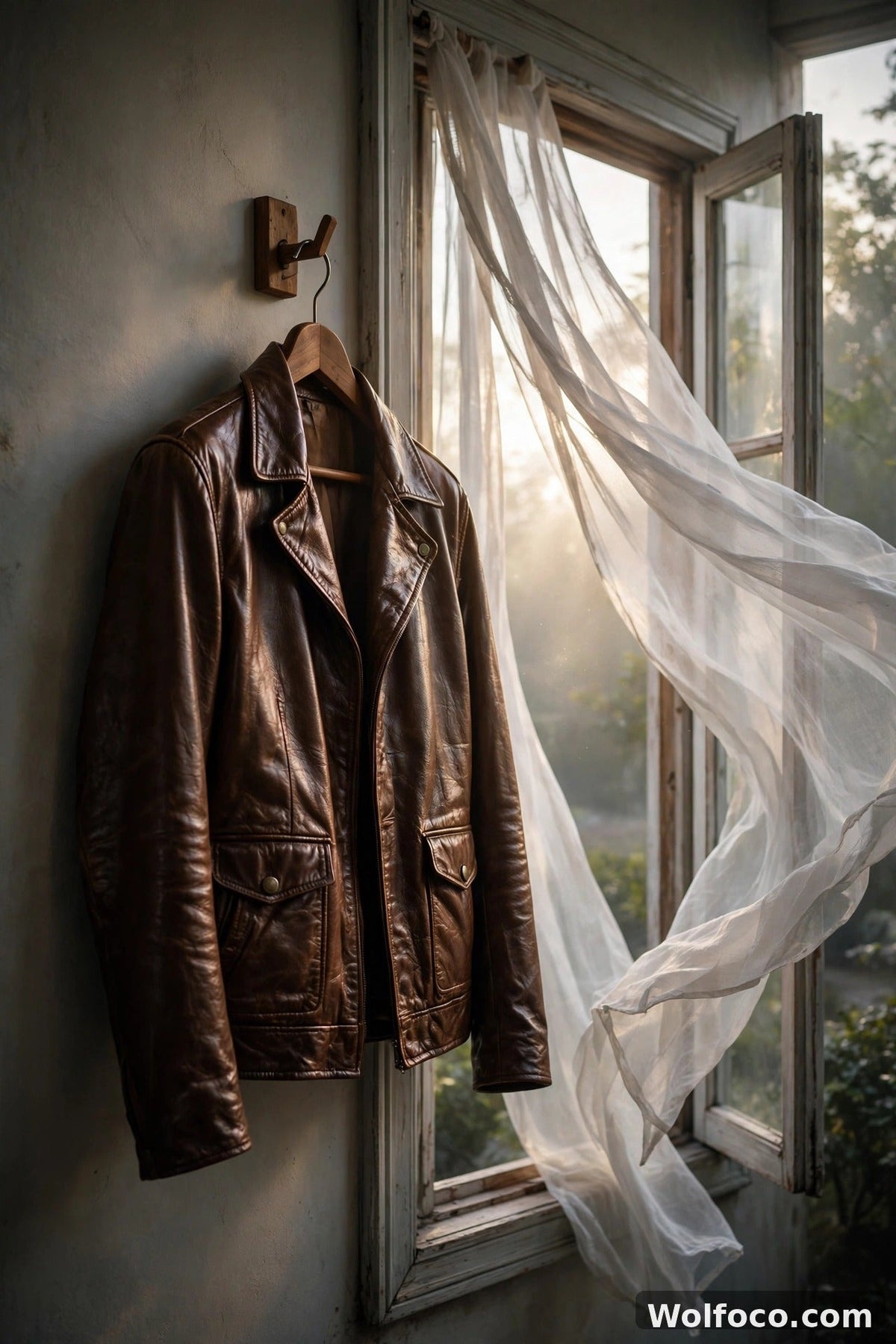

Quick answer: To get a musty smell out of a leather jacket, air it outside in shade for a few hours, wipe the surface with a 1:1 mix of white vinegar and water, then seal it overnight in a box with an open bowl of baking soda. Finish with leather conditioner. Skip perfume, bleach, and washing machines — they damage leather.
You know the moment. You pull your favorite leather jacket out of the closet, looking forward to wearing it, and it hits you — that damp, sour, basement smell. Musty leather is one of the most common jacket problems there is, and the good news is that it's almost always fixable at home in a day or two.
The smell means moisture got trapped in the leather and the lining — usually from storage, not from anything you did wrong. Leather is a natural material; it absorbs odors the way it absorbs everything else. What follows is the exact protocol that works: airing done right, a vinegar wipe, baking-soda absorption, and conditioning. Plus the mistakes that make it worse.
Why leather jackets turn musty
Mustiness is mildew's calling card. When a jacket sits in a closed closet, a garment bag that doesn't breathe, or a damp room, moisture settles into the leather fibers and the lining. Warm, still air does the rest. The jacket doesn't have to get rained on — months of poor airflow alone will do it.
This is also why the smell often shows up in spring, when jackets come out of winter storage. If your jacket got wet at some point and wasn't dried properly, that wet episode is usually the origin story. Our guide on what to do when a leather jacket gets wet covers the drying side; this guide handles the smell that lingers afterward.
Step 1: Air it out — properly
Start with the simplest, most underrated step. Hang the jacket on a broad, sturdy hanger — never a wire one — and put it outside in open shade for 3 to 6 hours. A porch, a balcony, or a breezy room with the windows open all work. Fresh moving air pulls trapped moisture and odor out of the fibers.

Shade, not sun: a few hours of moving air does more than a week in a dark closet.
Two rules: no direct sunlight, which dries and fades leather, and bring it in before evening damp sets in. If the mustiness is mild — a faint closet smell rather than a sour punch — airing alone sometimes solves it. Most cases need the next steps too.
Step 2: The vinegar wipe
White distilled vinegar is the workhorse of leather deodorizing. It's mildly acidic, which neutralizes the alkaline compounds behind musty odors, and it evaporates cleanly without leaving its own scent behind once dry.

A lightly damp cloth, not a wet one — leather and soaking don't mix.
Mix equal parts white vinegar and water in a bowl. Dampen a soft white cloth (white, so no dye transfers), wring it until it's barely moist, and wipe down the entire outer surface — panels, collar, cuffs, seams. Then turn the jacket inside out and do the lining, which is where most of the smell actually lives. Let it air-dry in shade afterward. The faint vinegar scent disappears as it dries, taking the mustiness with it.
Step 3: Baking-soda absorption overnight
For stubborn smells, baking soda does what air can't: it sits against the leather for hours and absorbs odor molecules. This is the step that rescues jackets vinegar alone couldn't fix.

The box method: contained air, maximum contact, zero effort.
Put the jacket in a large cardboard box or a breathable cotton garment bag — never plastic. Set an open bowl of baking soda inside with it (about a cup), close the box, and leave it 12 to 24 hours. For a really sour jacket, you can also sprinkle baking soda lightly over the lining, leave it overnight, and shake it out thoroughly the next day. Brush off every trace with a soft brush afterward; don't leave powder sitting in seams.
Step 4: Condition after deodorizing
Here's the step people skip, and it's the one that protects your jacket long-term. Vinegar and baking soda both pull moisture and oils out of leather along with the odor. If you stop there, the leather is clean-smelling but slightly dried out — and dry leather cracks.

Conditioning restores the oils deodorizing strips away. Never skip it.
Once the jacket is fully dry and odor-free, apply a thin, even coat of leather conditioner with a soft cloth, working in small circles. Let it absorb for 20 minutes, then buff off the excess. This restores suppleness and leaves a clean, natural leather scent. Our leather cleaning and conditioning guide goes deeper on choosing the right conditioner for your finish.
What NOT to do
Panic makes people reach for the wrong fixes. Every one of these is common, and every one makes things worse:
Don't spray perfume or cologne on it. Fragrance masks odor for an hour and then bonds with it, creating something worse. It can also stain and dry the finish.
Don't use Febreze or fabric deodorizers. They're formulated for textiles, not leather. The chemicals can discolor the finish and leave a residue that attracts dirt.
Don't put it in the washing machine. Agitation, detergent, and a spin cycle will destroy a leather jacket's structure, strip its oils, and warp the shape permanently.
Don't use bleach or harsh cleaners. Bleach eats through leather dye and weakens fibers. There's no dilution that makes it safe.
Don't blast it with heat. Hair dryers, radiators, and direct sun dry the surface while trapping moisture deeper inside — the smell comes back, and now the leather is stiff too.
Sometimes the freshest-smelling jacket is a new one. If yours has survived one too many damp closets, browse hand-finished leather jackets built to age beautifully — and store this one right next time.
When the smell means professional help
The home protocol handles 9 out of 10 musty jackets. Call a leather specialist if: the smell persists after two full rounds of the protocol above; you can see dark spots or white fuzz (active mold, not just odor); or the lining smells strongly of mildew while the outside seems fine — linings sometimes need professional cleaning or replacement.
A cobbler or leather-care professional can ozone-treat or deep-clean a jacket for far less than a replacement costs. Mention the mustiness specifically when you bring it in — it's a different job than a standard clean.
Keep it from coming back
Odor removal is only half the battle. Mustiness returns to jackets that go back into the same conditions, so change the storage: broad padded hanger, breathable cotton garment bag (never plastic), and a closet with airflow. A small dehumidifier or a few silica packets in a damp closet work quietly in the background.

Airflow is the whole game. Plastic bags and crammed closets are how mustiness starts.
Our full guide to storing leather jackets and bags covers hangers, covers, and climate in detail. Get the storage right and you'll never need this protocol again — but it's good to know it's here.
Frequently asked questions
How long does it take to get a musty smell out of a leather jacket?
Plan on one to two days. Airing takes a few hours, the vinegar wipe about 30 minutes plus drying time, and the baking-soda box works best left overnight for 12 to 24 hours. Stubborn cases may need a second overnight round. Rushing any step — especially drying — is what causes repeat smells.
Can I use Febreze on a leather jacket?
It's not recommended. Fabric deodorizers are formulated for textiles and can discolor leather finishes or leave residues that attract dirt. The vinegar-and-baking-soda protocol above is safer, cheaper, and more effective on leather specifically.
Will the musty smell come back after treatment?
Only if the jacket goes back into damp, airless storage. The protocol removes the odor; storage prevents its return. Keep the jacket on a broad hanger in a ventilated closet with a breathable cover, and the smell won't come back.
Does baking soda damage leather?
Not when used correctly. An open bowl beside the jacket is completely safe. Sprinkling it directly on the lining is also safe as long as you brush it all off afterward — don't let powder sit in seams indefinitely, and never mix it into a wet paste on the leather.
Why does my leather jacket smell like mildew even though it never got wet?
It absorbed ambient moisture over time. Closets against exterior walls, basement storage, garment bags that don't breathe, and humid climates can all push enough moisture into leather to grow mildew without a single rain episode. Airflow and breathable storage are the fix.
Ready for a jacket that smells like nothing but good leather? Every Wolfoco leather jacket is hand-finished from quality hides — including the Women's Brown Leather Motorcycle Jacket and the Men's Vintage Brown Cafe Racer — and our custom sizing means it fits like it was made for you. Because it can be.

