
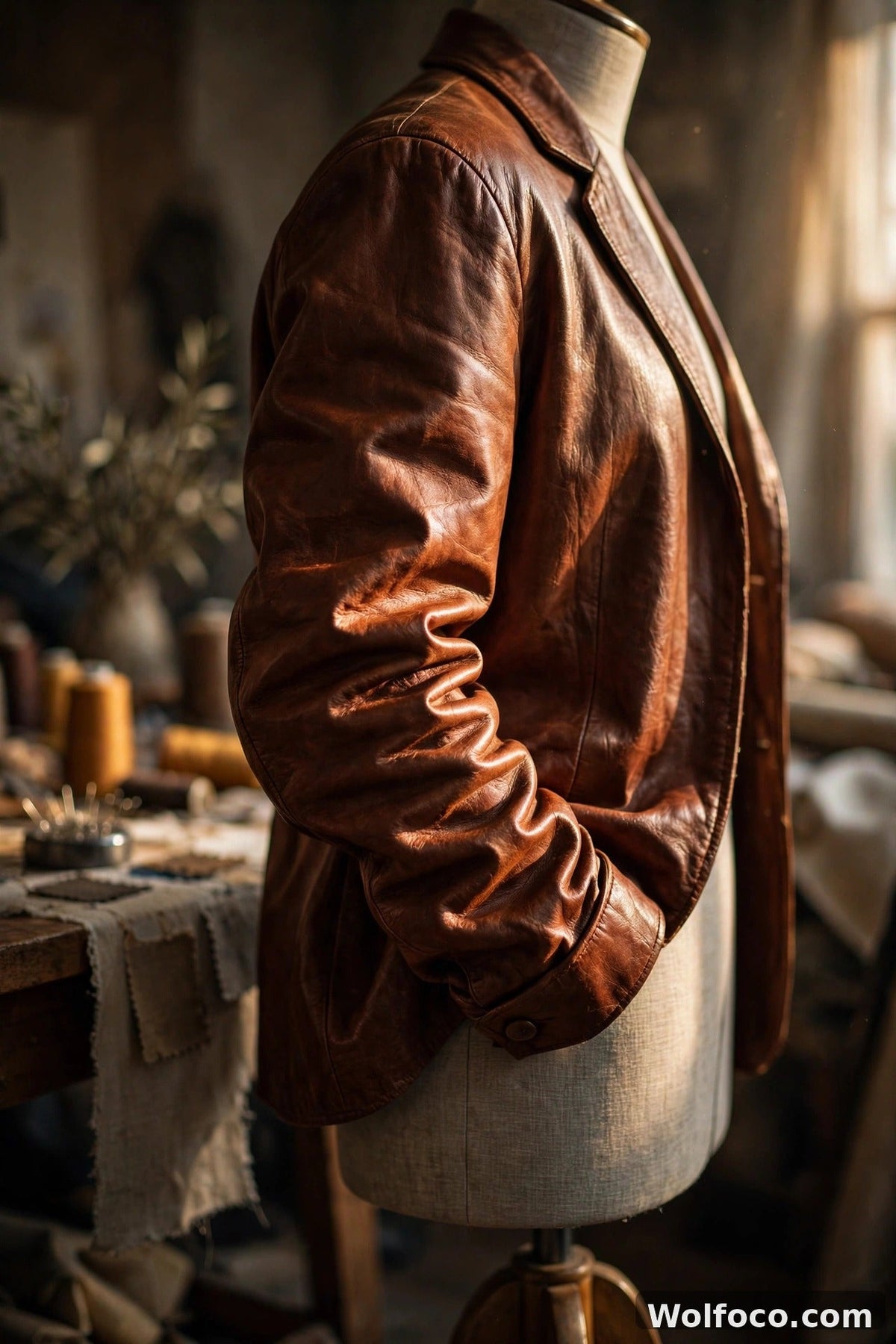

Quick answer: To get wrinkles out of a leather jacket, first identify the wrinkle type. Storage creases respond to hanging the jacket on a wide hanger in a steamy bathroom for 15–20 minutes, followed by leather conditioner. Wear creases are natural patina and best left alone. Heat damage, unfortunately, is usually permanent. Never iron a leather jacket directly.
You pull your leather jacket out of the closet after a long summer, or you unfold one that just arrived in the mail, and there they are — creases across the shoulders, a deep fold line down one sleeve, wrinkles fanning out from the elbows. Your first instinct is probably to reach for the iron. Don't. Not yet, anyway.
Here's the thing most care guides skip: not all wrinkles are the same, and they don't all want the same treatment. Some creases are character — the patina that makes a leather jacket look better at year five than at year one. Some are temporary and will relax on their own if you give them half a chance. And a few are permanent, and anyone who tells you otherwise is selling you something. This guide will help you tell the difference, then give you the right fix for the fixable ones.
Step Zero: Diagnose Your Wrinkle Type First
Before you do anything, spend thirty seconds reading the wrinkle itself. It tells you what happened and what will work.
Type 1 — Wear creases. Fine lines radiating from the elbows, across the lower back, or at the shoulder where your arm moves. These develop gradually from wearing the jacket. They follow the grain of the leather and feel smooth, not sharp. This is patina, and it's the reason a broken-in leather jacket looks the way it does.
Type 2 — Storage creases. Sharp, straight lines — across a folded sleeve, a hard crease where the jacket was pressed flat in a box, or accordion folds from being crammed into a suitcase. These appear suddenly after storage or shipping. The leather feels pinched along a defined line rather than softly creased. These are the fixable ones.
Type 3 — Heat damage. Wrinkles paired with a stiff, dry, almost papery feel — often on jackets left near a radiator, in a hot car, or too close to a heater. The surface may look slightly darker or duller along the creases. This one is the hard truth, and we'll get to it.

Up close, healthy creases follow the grain of the leather. Sharp, pinched lines mean the jacket was folded — those are the ones you can fix.
Type 1: Wear Creases — The Good Kind
If your wrinkles are the elbow-and-shoulder variety that appeared slowly over months of wear, congratulations: your jacket is aging the way leather is supposed to age. Full-grain leather develops these lines as the fibers flex, and they soften the jacket's whole silhouette. Trying to "fix" wear creases usually means fighting the material's nature — and winning would make the jacket look worse, not better.
What you should do instead is condition. Dry leather creases more harshly and holds onto every line; well-conditioned leather keeps its creases soft and even. A light coat of quality leather conditioner twice a year is all the maintenance wear creases need. If you're unsure about the routine, our leather jacket cleaning and conditioning guide walks through the whole process step by step.
Type 2: Storage Creases — Here's the Fix
Storage creases are a memory problem. Leather is skin, and like skin it holds a shape when pressed into one for weeks. The fix is to relax the fibers with gentle warmth and moisture, then let the jacket remember a better shape — hanging naturally on your shoulders instead of folded in a box.
There are two methods that actually work. Use the first for light to moderate creases; the second for stubborn ones. Both are safe for genuine finished leather when done as described.
Method 1: The Hang-and-Steam Reset
This is the gentlest method and the one to try first. You need a wide, sturdy hanger — the broad wooden kind, not a wire one that will imprint its own creases on the shoulders — and a steamy bathroom.
Hang the jacket in the bathroom, run the shower hot with the door closed, and let the room fill with steam for 15 to 20 minutes. Don't hang the jacket in the shower stream or let water drip on it; you want ambient humidity, not a soaking. The warm moisture relaxes the leather fibers along the crease lines. Afterward, move the jacket to a ventilated room (still on the wide hanger) and let it dry slowly at room temperature for a full day. Most storage creases visibly soften within 24 hours, and the rest ease out over the next few days of wear.

A wide wooden hanger and ambient steam — not direct water — is the safest first move against storage creases.
Method 2: Conditioner and Body Warmth
For creases that survive the steam treatment, conditioner does the deeper work. Leather conditioner replenishes the oils that keep fibers supple, and supple fibers release creases instead of holding them.
Work a thin, even layer of conditioner into the creased areas with a soft cloth, using small circular motions. Don't glob it on — leather absorbs slowly, and excess just sits on the surface. Then wear the jacket. Seriously: your body warmth and movement are the best finishing tool here. An hour of wear after conditioning does more than a day on a hanger. Repeat the conditioning once more after a week if the crease is still visible. Between the steam reset and two rounds of conditioning, the vast majority of storage creases disappear or fade to invisibility.

Thin, even coats of conditioner — worked in with a soft cloth — relax stubborn creases better than any shortcut.
Type 3: Heat Damage — The Honest Truth
Now the part nobody likes to hear. If the wrinkled area feels stiff and dry, or the leather looks scorched, dulled, or cracked along the creases, heat has damaged the fibers themselves. This isn't a memory problem anymore; the structure of the leather has changed. No amount of steaming or conditioning will fully reverse it.
Conditioning can still help — it will soften the area and stop the damage from spreading into cracking — but set your expectations honestly. A jacket with genuine heat damage will never look new again. The practical question becomes whether the damage is cosmetic enough to live with (often it is, on a well-worn jacket where it reads as character) or whether it's time to replace the piece. If it's the latter, it's worth investing in a jacket built from better hides this time — thicker full-grain leather resists this kind of damage far better than thin, heavily finished splits.
Tired of fighting a jacket that was never great leather to begin with?
Wolfoco jackets are cut from hand-finished, full-grain hides that age into patina instead of damage — and every piece can be made to your exact measurements. Shop leather jackets →
Reader favorites: the Men's Vintage Brown Cafe Racer and the Women's Black Motorcycle Jacket.
What NOT to Do
A quick list of the advice you'll find elsewhere that you should ignore:
Don't iron it directly. A hot iron on leather scorches the finish and can melt bonded or coated leathers outright. If you must use an iron, keep it on the lowest setting, place a thick cotton cloth between iron and leather, keep it moving, and never let it sit — but honestly, the steam method above achieves the same thing with none of the risk.
Don't use a hair dryer or heat gun. Concentrated dry heat is exactly how Type 3 damage happens. It feels productive in the moment and creates a permanent problem.
Don't soak the jacket. Drenching leather to "relax" it waterlogs the fibers and the lining, risks dye bleed and water spots, and takes days to dry — during which new creases can set. Ambient steam is plenty.
Don't hang it on a wire hanger. Thin wire digs into damp leather shoulders and leaves two permanent dents. Wide wooden or padded hangers only.

The entire toolkit you actually need: steam, a wide hanger, conditioner, and patience. No iron required.
Keeping wrinkles away next time. Prevention is mostly about storage. Always hang your jacket on a wide hanger in a ventilated closet — never folded in a drawer, never crammed behind heavier coats, and never in a plastic garment bag for long periods (leather needs to breathe; trapped moisture causes its own problems). If you travel with it, wear it on the plane rather than folding it into a suitcase. And condition twice a year. A jacket that's stored right and conditioned regularly simply doesn't develop the sharp creases that send people searching for fixes.
Our leather storage guide covers the full routine — hangers, bags, humidity, and the mistakes that age a jacket five years in one summer.
Frequently asked questions
Can you iron a leather jacket to remove wrinkles?
Not directly — a hot iron scorches leather and can melt coated finishes. The safe alternative is hanging the jacket in a steamy bathroom for 15–20 minutes, which relaxes creases with gentle ambient moisture and no contact heat. If you insist on an iron, use the lowest setting with a thick cotton cloth as a barrier and never let it rest in one spot.
Will wrinkles in a leather jacket go away on their own?
Light storage creases often relax within a few days of hanging and wearing, especially on thicker hides. Sharp fold lines from long storage usually need help — steam plus conditioner. Wear creases at the elbows and shoulders are permanent by design; they're patina, not damage.
Does steaming damage leather jackets?
Ambient steam from a hot shower is safe — it's gentle, indirect moisture for a short time. What damages leather is direct steam blasted at close range, soaking, or combining heat with pressure (like an iron). Keep the jacket out of the water stream and let it dry slowly at room temperature afterward.
How do you get creases out of a leather jacket sleeve?
Sleeve creases respond well to the conditioner-and-wear method: work conditioner into the creased area, then wear the jacket for an hour or two so body warmth and movement smooth the fibers. For a sharp fold from shipping, try the hang-and-steam reset first, then condition.
Can a dry cleaner remove wrinkles from a leather jacket?
A cleaner that specializes in leather can press out storage creases, but it's rarely necessary — the home methods in this guide achieve the same result for free. Skip regular dry cleaners for leather; the solvents used in standard dry cleaning strip the natural oils from hides. Always choose a leather specialist if you go the professional route.

The goal isn't a wrinkle-free jacket — it's a jacket whose lines tell the right story.
A good leather jacket will never be perfectly smooth, and you shouldn't want it to be. The lines it earns from being worn are what separate it from everything else in your closet. Fix the storage creases, respect the wear creases, and store it right — and the next time you pull it out, it'll look like it was waiting for you, not folded away and forgotten. Browse the Wolfoco leather jacket collection →

