Quick answer: Store leather jackets on broad, shaped hangers in a cool, dry and ventilated wardrobe. Store leather bags upright, lightly supported with acid-free tissue, inside breathable dust bags. Keep both away from direct sunlight, radiators, damp basements, sealed plastic and crowded surfaces that create permanent creases.

Leather storage checklist
| Item | Correct support | Avoid |
|---|---|---|
| Leather jacket | Wide contoured hanger with room around shoulders | Wire hanger, folding, crowded rail |
| Structured bag | Upright, lightly filled, handles unstressed | Heavy stacking or hanging by handles |
| Soft bag | Natural shape with light acid-free tissue | Overstuffing that stretches seams |
| Long-term cover | Breathable cotton dust bag | Sealed plastic |
| Environment | Cool, dry, shaded and ventilated | Heat, direct sun and persistent humidity |
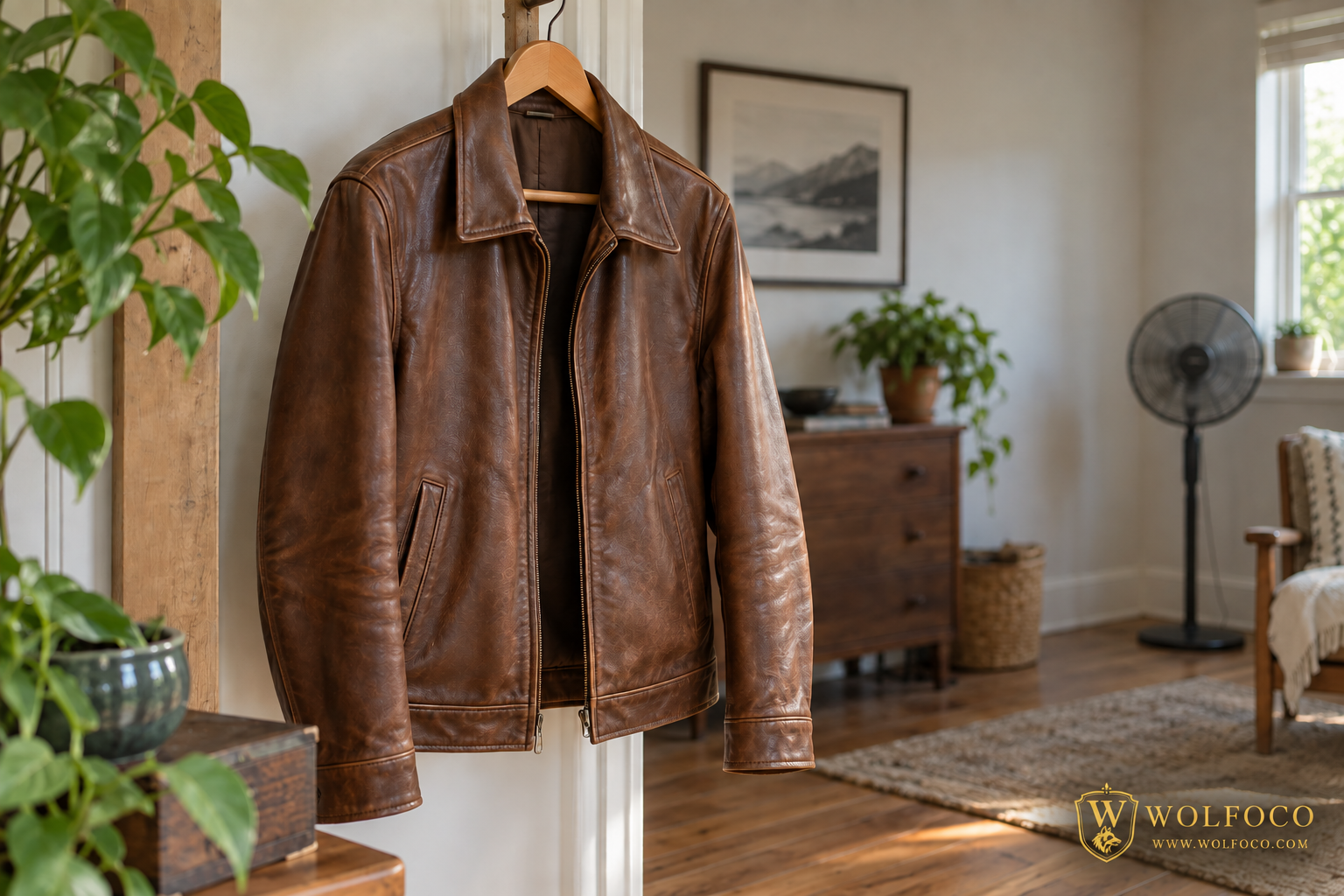
How to store a leather jacket
- Empty every pocket so weight does not distort the garment.
- Make sure the jacket is clean and completely dry.
- Close heavy hardware only enough to keep it controlled; do not force tension.
- Use a hanger broad enough to support the full shoulder shape.
- Leave space between garments so leather is not crushed.
- Cover with breathable cotton if dust is a concern.
Do not fold a jacket for months. Folding concentrates pressure along the same lines and can create creases, particularly in structured or coated leather.

How to store a leather bag
Remove loose contents, crumbs and leaking pens. Support the interior with loosely placed acid-free tissue or clean undyed fabric. Do not use newspaper because ink can transfer, and do not pack so firmly that seams or closures stretch. Place straps inside where possible without sharp folds, and store the bag upright in a breathable cover.

Temperature, humidity and sunlight
Stable household conditions are preferable to attics, garages, cars and damp basements. Heat can dry and harden leather; prolonged sunlight can fade color; persistent moisture encourages odor or mold. Do not press leather directly against painted walls, unfinished wood or metal that may transfer color or create marks.

Should leather be conditioned before storage?
Condition only when the product-specific care guidance and leather condition support it. More is not better. Excess product can darken leather, attract dust or affect the finish. Patch-test first and allow the item to absorb and air fully before covering it.

Monthly or seasonal inspection
- Check for dampness, odor, mold or pest activity.
- Confirm tissue has not compacted or transferred color.
- Reposition straps and hardware to avoid long-term pressure marks.
- Air the item briefly in a shaded room.
- Address spills or stains before returning it to storage.
What if you discover mold?
Move the item away from other leather and fabrics without spreading spores. Mold can present health and material risks; extensive growth, recurring odor or valuable pieces should be assessed by a qualified professional. Fix the moisture source before returning anything to the storage space.
Frequently asked questions
Can I store leather in plastic?
Sealed plastic can trap moisture and restrict airflow, so a breathable dust cover is generally safer.
Can I fold a leather jacket in a suitcase?
For short travel, minimize folds and unpack promptly. Long-term folded storage is not recommended.
Should I hang a leather handbag by its handles?
Usually no for extended storage; the bag’s weight can strain handles and attachment points. Support it upright instead.
Can leather be stored in a garage?
Garages often experience heat and humidity swings, making them a poor choice.
How often should stored leather be checked?
Inspect seasonally and more often in humid environments or after any moisture event.
Related guides: read cleaning and conditioning, damage first aid, and the work-and-travel tote guide. Browse all Wolfoco products.