

Quick answer: Nubuck leather is top-grain cowhide that has been lightly sanded or buffed on the outer (grain) side to create a fine, velvety nap. It is stronger and more durable than suede, which is sanded on the inner split side, but it needs more care than smooth full-grain leather — it stains easily and hates water.
Run your hand across a nubuck jacket and something strange happens. It feels like velvet, but it wears like armor. That contradiction is exactly why people get confused about what nubuck actually is — and why so many definition pages get it wrong by calling it "fancy suede."
It is not suede. Not even close, once you know where to look. Here is how nubuck is made, how it stacks up against suede and full-grain leather, how to keep it alive, and what to check before you buy.
How Nubuck Is Made
Nubuck starts life as ordinary top-grain cowhide — the strong outer layer of the skin, the same starting point as the smooth leather in a quality jacket. The difference happens at the finishing stage. The tannery lightly sands or buffs the grain (outer) surface, raising a very short, fine nap of fibers. That nap is what gives nubuck its signature velvet feel.
This is the detail that separates nubuck from suede: suede is made from the inner split of the hide — the softer, weaker underside — which is then napped. Nubuck keeps the tough outer grain intact and just roughs up the very top of it. Same velvet hand-feel, much stronger leather underneath.
After sanding, good nubuck is dyed (usually through-dyed, so the color runs deep) and treated with protective finishes. Cheap nubuck skips the protection step — more on why that matters when we get to buying.

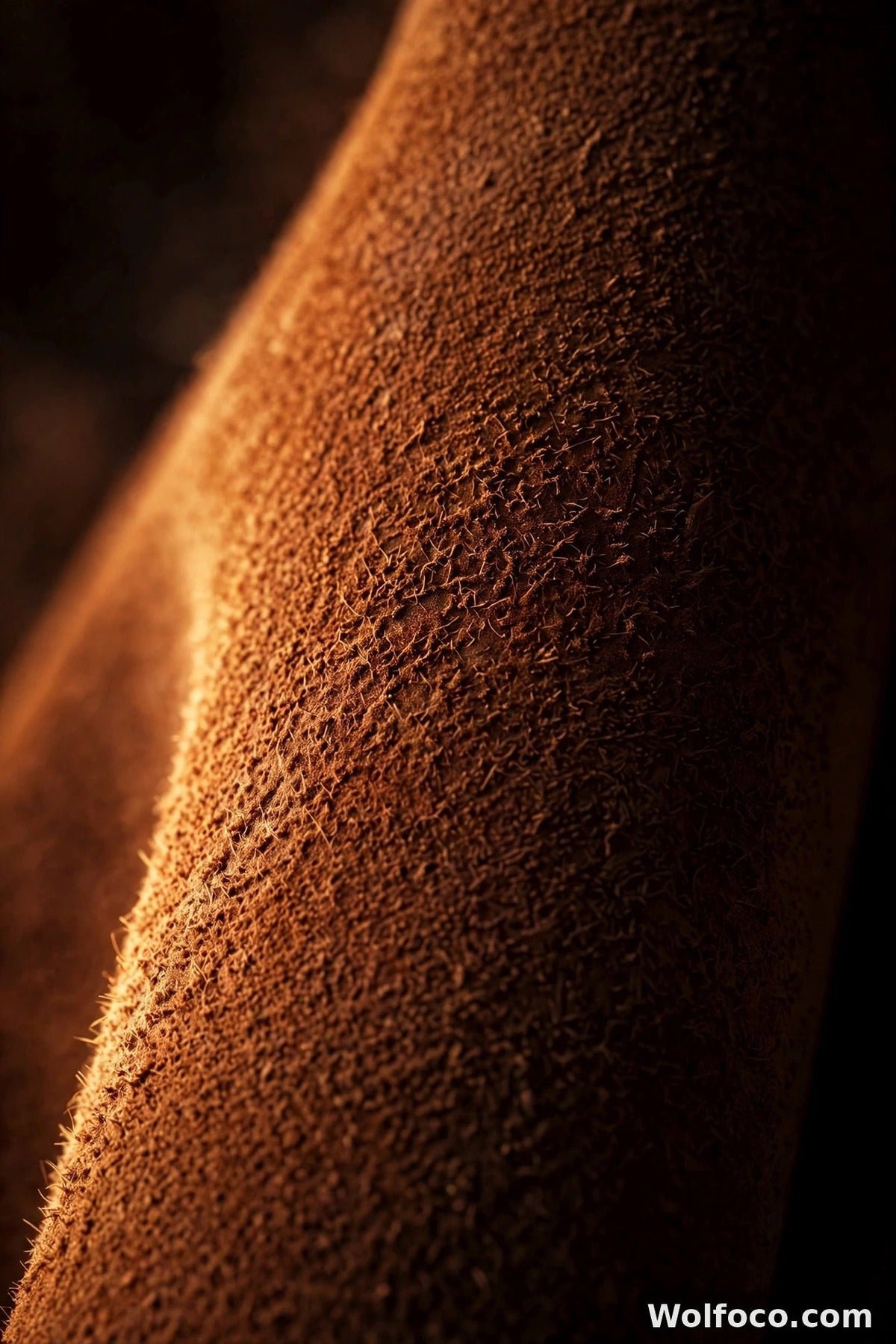
The buffing stage is where top-grain hide becomes nubuck — the grain surface is lightly sanded to raise the nap.
Nubuck vs Suede: The Difference That Actually Matters
People mix these two up because they feel similar at first touch. Underneath, they are different materials:
Strength: Nubuck is made from the grain side — the dense, strong outer layer. Suede is made from the split — the fibrous inner layer. Nubuck resists tearing and abrasion far better. This is why you see nubuck on motorcycle jackets and work boots, and suede on dress shoes and fashion pieces that live easier lives.
Nap length: Nubuck has a short, fine nap. Suede has a longer, softer, more open nap. Touch them side by side and suede feels plusher; nubuck feels denser and more substantial.
Price: Real nubuck costs more because it uses the prime grain side of the hide. If a "nubuck" jacket is suspiciously cheap, it is probably suede with a marketing upgrade.
Care: Both hate water, but suede's open fiber structure stains faster and is harder to restore. Nubuck's tighter nap responds better to brushing and eraser treatment.

Nubuck's nap is short and dense — press it and the fibers shift, then brush back. Suede's nap is longer and looser.
Nubuck vs Full-Grain Leather
Full-grain leather is the unsanded, uncorrected outer layer of the hide — the strongest and most expensive cut. Nubuck is technically a top-grain leather: the surface has been altered (sanded), so it can no longer be called full-grain, even though it comes from the same strong part of the skin.
In practice: smooth full-grain is tougher, develops a rich patina, and shrugs off rain. Nubuck is slightly less abrasion-resistant than its full-grain sibling, develops a soft sheen rather than a glossy patina, and demands respect around water. What nubuck gives back is that unmistakable velvet texture and a matte, understated look that smooth leather can't match.

Side by side: smooth full-grain (toughest, glossier), nubuck (velvety, matte), suede (softest, weakest).
Nubuck vs Top-Grain and Genuine Leather
Quick orientation, since the labels get confusing: nubuck is a type of top-grain leather — the grain side has just been sanded. "Genuine leather" is a grade below both, made from the leftover splits after the top layers are taken, and it will never feel or age like nubuck. If you want the full breakdown of how the grades rank, our guide on full-grain vs top-grain vs genuine leather lays it out, and is genuine leather real leather answers the question everyone secretly asks.
How to Care for Nubuck Leather
Nubuck care is simple but non-negotiable. Do it right and nubuck outlasts most materials in your wardrobe.
Brush it regularly. A soft brass-bristle suede brush, used in one direction, lifts the nap and removes surface dust. This alone handles most day-to-day wear. Brush after wearing, while any dirt is still loose.
Protect it before wearing. A silicone-free nubuck/suede protector spray is the single best investment you can make. Apply to new nubuck before it ever goes outside, and reapply every few months. It won't make nubuck waterproof, but it buys you precious time against rain and spills.
Erase scuffs. A nubuck eraser block (essentially a firm rubber block) rubs out dry scuffs and light marks. For stubborn spots, lightly steam the area — hold it over a kettle, never against it — then brush once dry.
Let wet nubuck dry slowly. If it gets rained on, stuff it to hold its shape and let it air-dry at room temperature. Never use heat. Once fully dry, brush the nap back up. For a deeper dive on conditioning principles, see how to condition a leather jacket — but note the exception below.

The nubuck essentials: a brass-bristle brush, protector spray, a clean cloth, and an eraser block.
What NOT to Do With Nubuck
Don't use regular leather conditioner or oil. This is the #1 way people ruin nubuck. Oils and wax-based conditioners mat the nap flat and darken the leather permanently. Use only products labeled for nubuck or suede.
Don't use water to clean it. Water leaves spots on nubuck that can be hard to lift. Dry methods first — brush, eraser, and only then specialized nubuck cleaner for real stains.
Don't dry it with heat. Radiators, hair dryers, and direct sun stiffen the leather and can crack the finish. Room temperature, always.
Don't store it in plastic. Nubuck needs airflow. A breathable garment bag or cotton cover keeps dust off without trapping moisture.
Like leather with a story? Our jackets are cut from full-grain hides built to age beautifully.
What to Look For When Buying Nubuck
Not all nubuck is equal. Before you pay nubuck prices, check four things:
1. Even nap. Run your hand across it. Quality nubuck has a uniform, short nap. Patchy or bald spots mean uneven sanding — walk away.
2. Color depth. Through-dyed nubuck shows rich, even color. If a scratch reveals pale leather underneath, the dye is surface-only and will wear unevenly.
3. Backing strength. Flex the leather. Good nubuck feels substantial and springs back. Thin, floppy "nubuck" is often suede in disguise — the price tag is the tell.
4. Water beading. On protected nubuck, a drop of water should bead briefly before absorbing. If it vanishes instantly and darkens the spot, the leather has no protective finish — budget for a protector spray on day one.

A well-made nubuck jacket: matte, velvety, and structured — the nap catches light differently than smooth leather.
Frequently asked questions
Is nubuck real leather?
Yes. Nubuck is genuine top-grain cowhide — the strong outer layer of the skin, lightly sanded to create a velvety nap. It is not synthetic and not suede; it is real leather with a sanded grain surface.
Is nubuck better than suede?
For durability, yes. Nubuck is made from the tough grain side of the hide while suede comes from the weaker inner split, so nubuck resists tearing and abrasion far better. Suede feels softer and usually costs less, but it wears out faster.
Is nubuck better than full-grain leather?
Neither is strictly better — they are different finishes of strong hide. Smooth full-grain is tougher, more water-resistant, and develops a glossy patina. Nubuck offers a velvet texture and matte look but needs more care and protection from water.
Can nubuck leather get wet?
It can survive light rain if dried properly — air-dry at room temperature, then brush the nap back up. But water spots nubuck easily, so a protector spray before wearing is essential, and soaking should be avoided.
How do you clean nubuck leather?
Dry methods first: brush with a brass-bristle suede brush, rub scuffs with a nubuck eraser block. Never use regular leather conditioner or oil — they mat the nap permanently. Use only cleaners and protectors made for nubuck or suede.
Does nubuck leather last long?
Yes — quality nubuck is very durable because it keeps the strong grain layer intact. With regular brushing and occasional protector spray, nubuck jackets and boots last for many years, developing a soft sheen rather than the glossy patina of smooth leather.
Still deciding which leather is right for you? Start with the grades — full-grain vs top-grain vs genuine leather — and if you are shopping, a well-made jacket from the men's leather jacket collection will outlast every trend cycle.

