
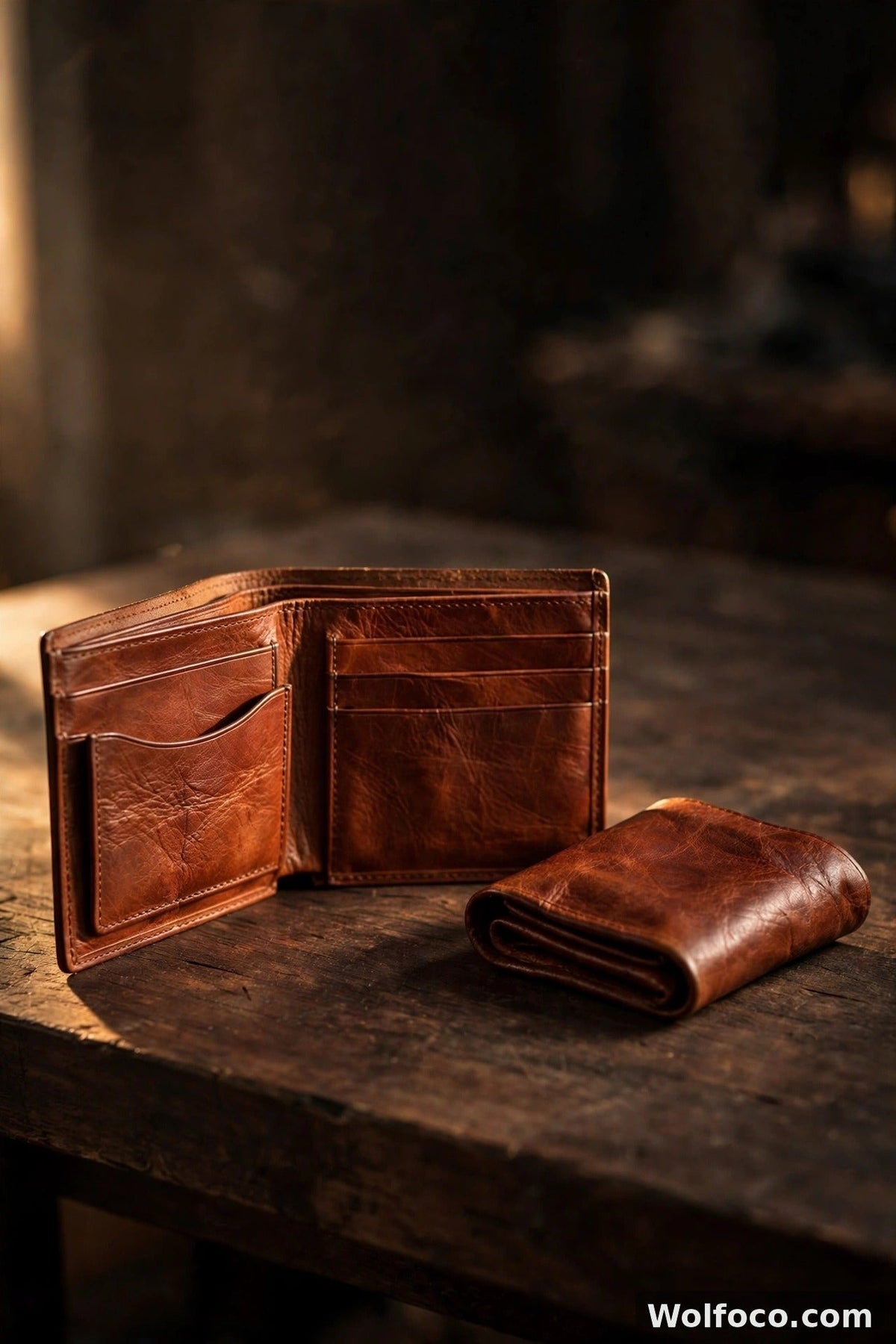

Quick answer: A bifold wallet folds once, stays slim, and suits front-pocket carry with 6–10 cards. A trifold folds twice, holds more (10–15 cards plus extras) but runs thick — better for back pockets or bags. Pick the bifold if you carry light and hate bulk; pick the trifold if you need maximum capacity in one wallet.
Every man hits this fork in the road sooner or later. You're standing in front of two wallets — one folds in half, the other in thirds — and the difference looks trivial until you've carried the wrong one for a year. A wallet is the one accessory you touch a dozen times a day, so the wrong choice nags you constantly: the bulge in your back pocket, the cards you can't quite fit, the fold that wears out first.
Here's the honest breakdown from people who make leather goods for a living: what each style actually holds, where each one belongs on your body, which fold lasts longer, and the mistakes that kill wallets early. By the end, you'll know exactly which one matches the way you carry.
What a Bifold Wallet Actually Is
A bifold is the classic: a single fold down the middle, like closing a book. Open it and you get two halves — card slots on one or both sides, a full-length bill compartment behind them. That's it. No gimmicks, no extra panels.
The beauty of the bifold is restraint. With one fold, there's less leather stacked on itself, so even loaded up it stays relatively flat. Most quality bifolds hold 6 to 10 cards plus folded bills without looking pregnant. It's the wallet for the man who carries the essentials and nothing more.

A well-made bifold: one fold, clean card slots, and a full-length bill compartment behind them.
What a Trifold Wallet Actually Is
A trifold folds twice, into three panels — like a letter going into an envelope. That extra fold buys you real estate: typically 10 to 15 card slots, multiple compartments, sometimes a dedicated ID window and extra stash pockets.
The trade is thickness. Every fold stacks leather on leather, and a loaded trifold can run close to an inch thick. For some men that's a non-issue — it lives in a back pocket or a bag and the capacity is worth it. For others, it's a brick they feel every time they sit down.

A trifold laid flat: three panels means more slots, more compartments — and more bulk when folded.
The Real Difference: Capacity vs. Bulk
Strip away the marketing and the decision comes down to one trade-off. Here's how the two styles compare side by side:
Bifold: 6–10 cards, bills, slim profile (roughly ½ inch loaded), one fold to wear out, easiest to slip in and out of a pocket.
Trifold: 10–15 cards plus extras, bills, coins in some designs, thick profile (up to 1 inch loaded), two folds to wear out, maximum organization.
Now do an honest audit of what you actually carry. Most men overestimate. Pull everything out of your current wallet and count: how many cards do you use weekly? The ones you touch once a year don't need to ride along every day. If the real number is under ten, a bifold handles it with room to spare — and your pocket will thank you.

Count what you actually carry before you choose. Most men need fewer slots than they think.
Front Pocket vs. Back Pocket: Where Each Belongs
Where you carry matters as much as what you carry. A bifold's slim profile makes it the natural front-pocket wallet — it slides in and out of chinos or jeans without printing through the fabric, and it's harder to lose or have lifted.
Trifolds, being thicker, mostly live in back pockets or bags. That's fine, but know the cost: sitting on a thick wallet all day is genuinely bad for your posture — chiropractors have a name for the resulting back pain. If you're a back-pocket carrier, either go slim or take the wallet out when you sit.

A slim bifold disappears into a back pocket. A loaded trifold announces itself every time you sit.
Carry light, carry well. The Keepsake is our full-grain leather bifold — clean card slots, a full-length bill compartment, and free personalization so it's unmistakably yours.
Durability: Which Fold Lasts Longer?
Here's something the product pages won't tell you: every fold in a wallet is a stress point. Leather creases, stitching flexes, and edges wear — and they wear fastest exactly where the wallet bends.
A bifold has one fold. A trifold has two. All else equal — same leather, same stitching — the bifold's single hinge outlasts the trifold's double hinge. That's not an opinion; it's mechanics. The trifold compensates with capacity, but if you're buying for a decade of daily use, fewer folds mean fewer failure points.
What matters more than fold count is construction. Look for full-grain leather (it ages instead of peeling — see our guide on what "genuine leather" really means), saddle stitching rather than a single machine line, and burnished or painted edges that won't fray. A well-made bifold in full-grain leather will outlive two cheap trifolds.

Saddle stitching and full-grain leather matter more than fold count — but fewer folds still means fewer stress points.
What NOT to Do With Any Wallet
A few habits kill wallets regardless of style. Don't overstuff card slots — forcing in extra cards stretches the leather permanently and the slots never grip again. Don't sit on a thick wallet day after day; it warps the fold and your spine in equal measure. Don't leave leather in a hot car or a damp bathroom; heat dries it out, moisture invites mildew.
And don't buy on slot count alone. A wallet with 20 slots you never fill is just bulk you're paying to carry. Buy for the carry you actually have, not the one you imagine.
So Which One Should You Carry?
Choose the bifold if: you carry under 10 cards, prefer front-pocket carry, want the slimmest profile, or you're buying a wallet to last a decade. It's the minimalist's choice and the craftsman's recommendation for most men.
Choose the trifold if: you genuinely need 10+ cards on you daily, you carry in a back pocket or bag, or you like having a dedicated spot for everything including ID and extras. Accept the bulk as the price of capacity.
Still torn? Go bifold. It's the style men switch to, rarely away from — once you've felt the difference a slim wallet makes, the extra slots stop looking like a feature and start looking like clutter.
If you're shopping for yourself or someone else, our personalized leather gifts guide covers why an engraved wallet beats a generic one every time — especially for groomsmen, fathers, and graduates.
Frequently asked questions
Is a bifold or trifold wallet better?
Neither is universally better — it depends on your carry. A bifold is slimmer, more durable (one fold instead of two), and better for front pockets. A trifold holds more cards and suits back-pocket or bag carry. Most men who try both end up preferring the bifold for daily use.
How many cards does a bifold wallet hold?
A quality bifold comfortably holds 6 to 10 cards plus folded bills. You can force more in, but overstuffing stretches the slots permanently. If you regularly need more than 10 cards, that's the signal to consider a trifold.
How many cards does a trifold wallet hold?
Most trifolds hold 10 to 15 cards plus bills, and some add coin pockets or extra stash compartments. The trade-off is thickness — a loaded trifold can approach an inch thick.
Do trifold wallets wear out faster than bifolds?
Generally yes. Every fold is a stress point where leather creases and stitching flexes, and a trifold has two folds to a bifold's one. Construction quality matters more than style, though — a well-made trifold still outlasts a cheap bifold.
Should a wallet go in the front or back pocket?
Front pocket is better for security and posture, and slim bifolds are ideal for it. Back pockets work for either style but avoid sitting on a thick wallet for hours — it warps the wallet and strains your back.
What is the best leather for a wallet?
Full-grain leather — it's the top layer of the hide, ages into a rich patina, and resists stretching and peeling far better than "genuine" or bonded leather. Our Keepsake bifold is cut from full-grain leather with saddle stitching for exactly that reason.
One wallet, a decade of carry. The Keepsake — personalized full-grain leather bifold, from $89. Browse the collection for wallets and personalized gifts.

