
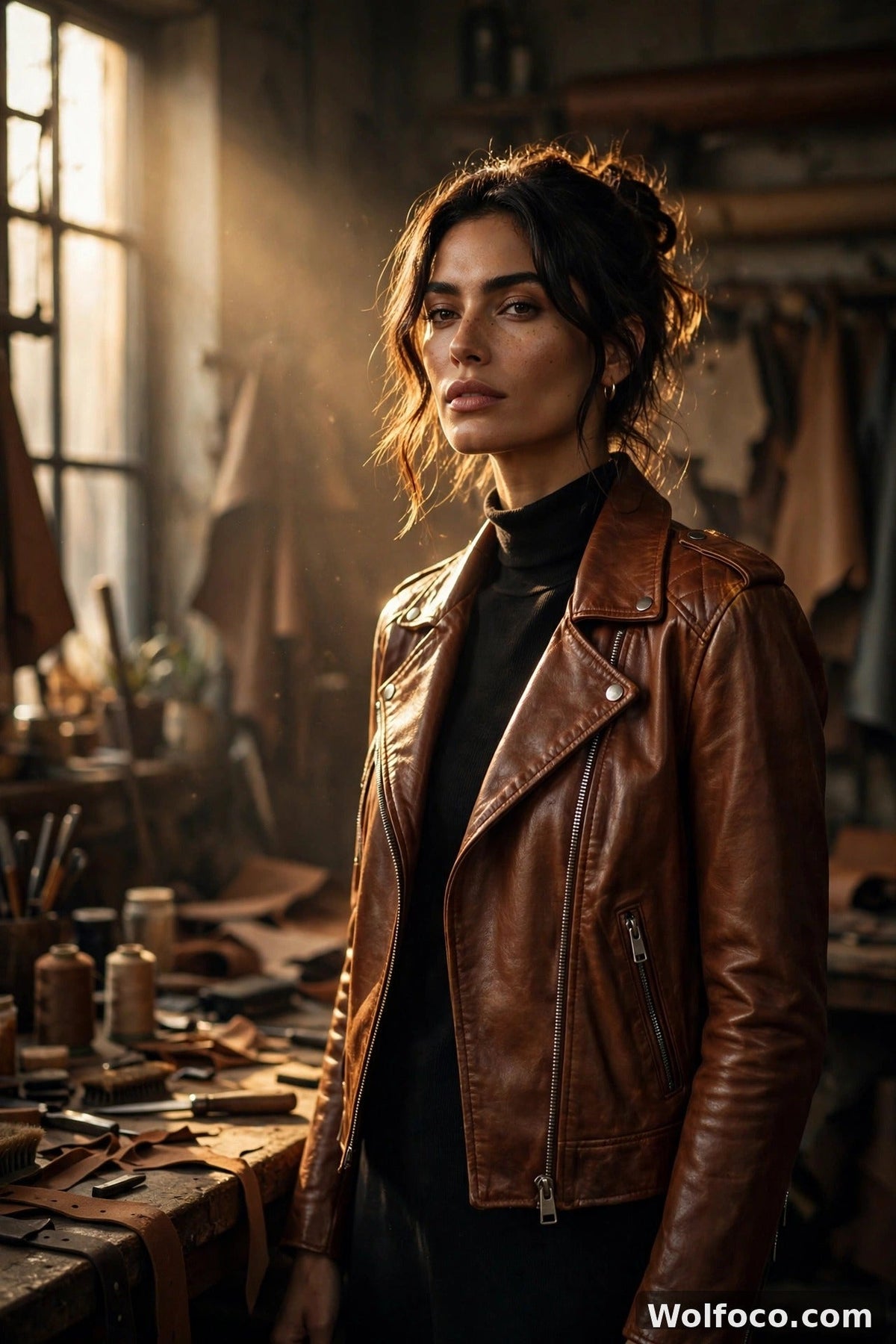

Quick answer: The best leather jacket brand depends on your budget and priorities. Value-tier brands ($200–$500) get you genuine leather and decent construction. Custom and made-to-measure makers deliver the best fit and hide quality for the money. Heritage houses charge for legacy and proven patterns. Ignore the label hype — check the leather grade, stitching, and lining first.
Type "best leather jacket brands" into Google and you'll drown in listicles. Most of them are affiliate roundups written by people who have never touched the jackets. Every pick earns the writer a commission, so the "winner" is usually whoever pays the most.
This guide is different. There is no single best brand — there are tiers, and each tier is best for a different kind of buyer. Once you understand what each tier actually buys you, the decision gets easy. And the brand that tops one tier would be a terrible pick in another.
Why "Best" Depends on What You're Buying For
A leather jacket is three purchases in one: the hide, the construction, and the fit. Brands distribute their effort across those three differently, and that's what creates the tiers.
A $300 jacket can have excellent leather and mediocre fit. A $1,200 jacket can fit like a glove and use leather that won't age well. The honest question isn't "which brand is best" — it's "which tier matches what I care about." Here's the landscape, tier by tier.
Tier 1: The Value Tier — Genuine Leather, Sensible Money

A clean, well-cut value-tier jacket — nothing fancy, nothing wrong with it.
This is the $200–$500 zone: the mall brands, the big online retailers, the fashion labels that sell leather alongside everything else. The jackets here are real leather — usually corrected-grain cowhide — cut in standard sizes and made in large runs.
What you get: a good-looking jacket that lasts several years with basic care. The leather won't develop much character, the lining will be polyester, and the fit will be "close enough" for most body types. For someone buying their first leather jacket, or someone who wants the look without the commitment, this tier is genuinely fine.
The trade-off: fit is the compromise. Standard sizes assume standard bodies, and very few of us are standard. If you've ever tried on a jacket that fit the shoulders but swam at the waist — or zipped at the waist but pulled at the chest — you've felt this tier's ceiling. Also, check the label: at the bottom of this tier, "genuine leather" can mean thin splits that wear through. Read our guide to what "genuine leather" really means before you buy here.
Best for: first-time buyers, trend-driven styles you'll wear for a few seasons, anyone testing whether the leather-jacket life is for them.
Tier 2: Custom & Made-to-Measure — The Smart Money

Made-to-measure: the jacket is built around your body, not the other way around.
Here's the tier most roundups skip, because made-to-measure makers don't run affiliate programs. A custom jacket is cut to your measurements — shoulders, chest, waist, arm length — from hides you choose, in a style you pick.
What you get: the single biggest upgrade in the leather world isn't better leather, it's better fit. A jacket built for your body drapes the way a good suit does. No pulling at the shoulders, no billowing at the waist, sleeves that end where they should. Most custom makers also let you choose the hide — full-grain cowhide for armor-like durability, lambskin for softness — so you're not stuck with whatever the factory ordered in bulk.
The trade-off: you wait. Custom takes weeks, not days, because someone is cutting and stitching for one person: you. You also can't try it on first, which is why a serious maker's measurement process matters more than their marketing. Ask how they handle fit checks before you order — a maker that rushes this step is a red flag.
Best for: anyone between sizes, with athletic or hard-to-fit proportions, or who wants one jacket that fits perfectly for a decade instead of three that fit okay. This is Wolfoco's home turf: made-to-measure leather jackets, built from your measurements in full-grain hides. If fit is what you care about most — and it should be — this tier is the best value in leather, full stop.
Done settling for "close enough"?
Tier 3: The Heritage Houses — Buy It for Life

Decades of wear, written into the leather. This is what the heritage tier sells.
Names like Schott NYC and Belstaff have been making leather jackets for the better part of a century. Their patterns are proven — the Perfecto, the Trialmaster — and their construction is battle-tested. You're paying for a design that survived decades of real wear, plus the certainty that the company will still exist if you ever need a repair.
What you get: iconic silhouettes, heavy-duty construction, and leather chosen to age beautifully. A heritage jacket at year ten looks better than it did at year one, which is the whole point.
The trade-off: price, and fit philosophy. Heritage brands cut for the average of their traditional customer, and their sizing can run quirky — some notoriously so. You're also paying a meaningful premium for the name on the label. Nobody will argue a heritage jacket is bad; the question is whether the premium over a well-made custom jacket buys you anything you actually need. For many buyers, it doesn't.
Best for: collectors, fans of specific iconic designs, and anyone who wants the story as much as the jacket.
The Detail That Separates Good From Great

Zoom in on any jacket you're considering. The grain and the stitching tell the truth.
Forget the brand for a moment and look at the jacket itself. Three things predict how it will treat you over the years:
1. The leather grade. Full-grain is the top of the hide — dense, strong, ages with character. Top-grain is sanded smooth — uniform but less lively. "Genuine leather" is a legal term that covers a wide range, mostly the lower end. The grade matters more than the brand name on the tag. Our leather grade guide breaks this down with photos.
2. The stitching. Look at the seams: tight, even, straight stitches with no loose threads. Turn a cuff inside out if you can — sloppy work hides where the maker hopes you won't look. Stitching density is one of the fastest honest signals of construction quality.
3. The lining and hardware. A jacket lives or dies by its zipper. YKK or equivalent metal zips, a lining that slides over your clothes instead of grabbing them, reinforced stress points at the pockets and underarms. Cheap hardware is the first thing to fail on a budget jacket.
Red Flags: What to Avoid at Any Price

Compare jackets side by side. The differences become obvious fast.
Some warning signs transcend tiers. Walk away when you see:
No leather grade on the label. A maker proud of its hides says "full-grain cowhide." A maker hiding something says "genuine leather" or just "leather" and hopes you don't ask. Vague labeling is the single most common trick in the industry.
Chemical smell that won't fade. Real leather smells like leather. A harsh chemical reek means heavy finishing hiding low-grade hides — and it often never fully airs out.
Plastic-feeling surface. If the "leather" feels like a raincoat, you're looking at bonded leather or PU with a leather name on the tag. It will peel within a couple of years. Our label decoder shows how to spot this in the store.
Prices too good to be true. A $99 "full-grain" jacket isn't full-grain. Material costs are material costs — anyone selling far below them is cutting corners you can't see yet.
How to Choose Your Tier
Run through this in order:
First, check your fit. If off-the-rack jackets never quite fit you — between sizes, broad shoulders, long arms — skip straight to made-to-measure. No heritage premium fixes a bad fit, and fit is what you see in the mirror every day. Our fit guide shows what right looks like.
Second, be honest about the timeline. Want a jacket for this season's look? Value tier. Want the last jacket of this style you'll buy for ten years? Custom or heritage.
Third, touch before you trust. Whatever tier you choose, feel the leather, check the stitching, work the zipper. Ten minutes of inspection beats ten hours of review-reading.
The best leather jacket brand is the one whose tier matches your priorities — and whose jacket passes the three-point inspection above. Everything else is marketing.
Ready to wear a jacket built for your body? Explore Wolfoco's made-to-measure leather jackets — full-grain hides, cut to your measurements, made to be the last one you need.
Frequently asked questions
What is the best leather jacket brand?
There's no single best brand — it depends on your priorities. Value-tier brands ($200–$500) suit first-time buyers. Made-to-measure makers deliver the best fit and hide quality for the money. Heritage houses like Schott NYC offer proven iconic designs. Judge any brand by leather grade, stitching, and hardware rather than the label.
Is it worth paying more for a leather jacket?
Up to a point, yes. The jump from a $150 jacket to a $400–$800 one buys genuinely better leather, construction, and hardware that lasts years longer. Beyond that, you're often paying for brand prestige or heritage storytelling rather than durability. The best value is usually a well-made custom or mid-tier jacket in full-grain leather.
Are custom leather jackets better than off-the-rack?
For fit, unquestionably — a jacket cut to your measurements drapes and moves better than any standard size. You also typically get your choice of hide and details. The trade-offs are lead time (weeks, not days) and the inability to try before you buy, so choose a maker with a thorough measurement and fit-check process.
How long should a good leather jacket last?
A well-made jacket in full-grain or top-grain leather, cared for with occasional conditioning and proper storage, should last a decade or more — many heritage pieces are still worn after 20+ years. Bonded leather and PU "leather" jackets typically peel or crack within 2–3 years regardless of brand.
Which leather is best for a jacket: cowhide or lambskin?
Cowhide is thicker, tougher, and develops rich patina — ideal for motorcycle and rugged styles. Lambskin is softer, lighter, and drapes elegantly — ideal for fashion-forward fits. Neither is universally "best"; match the hide to how you'll wear the jacket. Our cowhide vs lambskin guide compares them in detail.
What should I look for when buying a leather jacket?
Check three things: the leather grade on the label (full-grain is best), the stitching (tight, even, no loose threads — check inside the cuffs), and the hardware (sturdy metal zippers, smooth-gliding lining). Also confirm the fit with the zip test and shoulder check from a proper fit guide before committing.

