
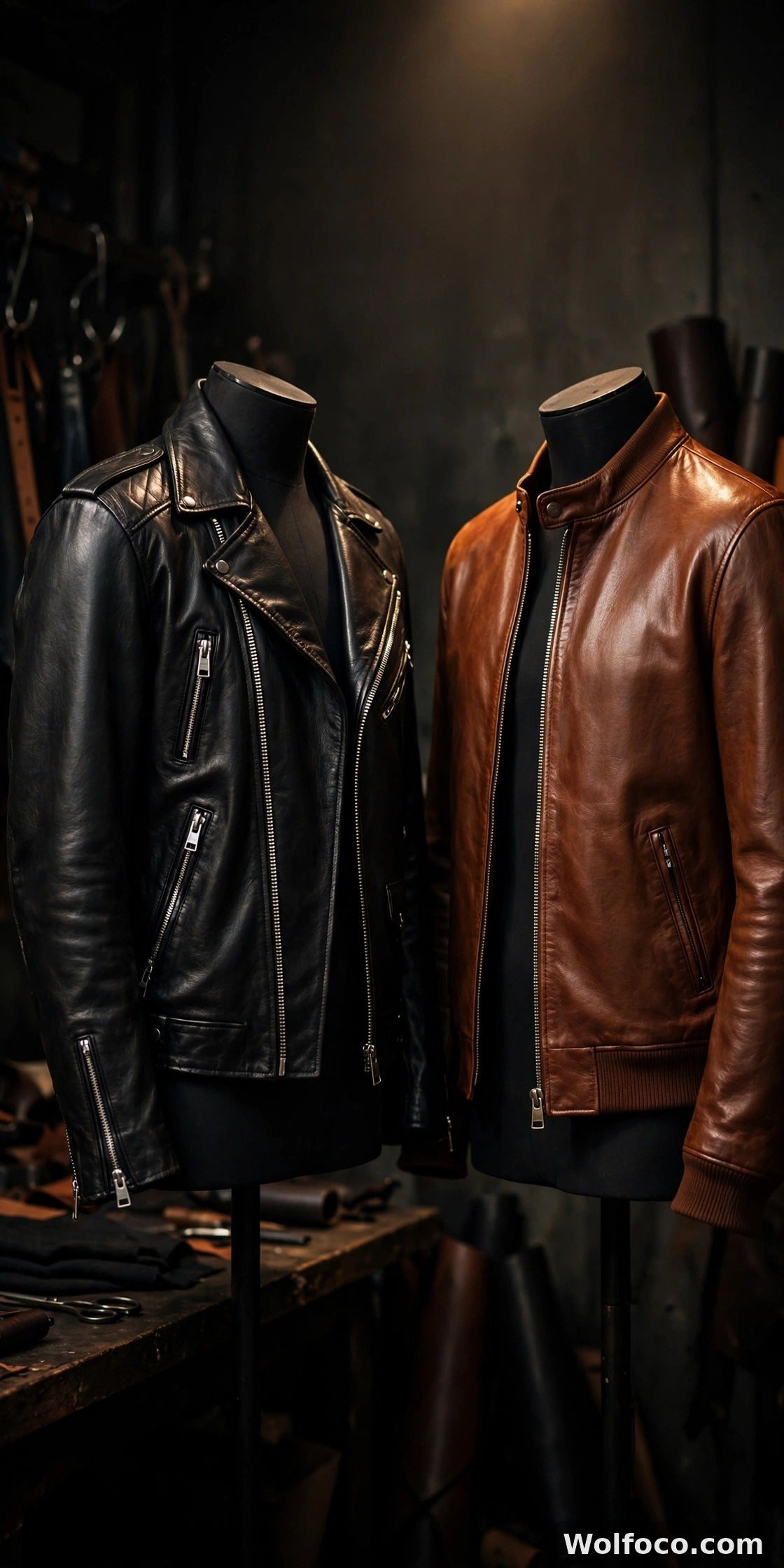

Quick answer: Choose the color that matches what you wear. If your wardrobe runs dark — black jeans, dark boots, monochrome outfits — a black leather jacket slots right in. If you wear earth tones, denim, and tan shoes, brown is the natural pick. Brown develops a richer patina with age; black stays sharp and uniform longer. Most guys eventually own both.
It's the oldest argument in the leather jacket world, and it never really gets settled — because it's the wrong question. Black isn't better than brown. Brown isn't better than black. The right color is the one that works with the clothes you already own and the life you actually live.
I've watched too many people buy a gorgeous brown jacket, take it home, and realize everything they own is black — so the jacket sits in the closet. This guide is built to prevent exactly that. We'll run a simple wardrobe test, look at how each color ages, walk through the occasions, and land on an answer that's about your closet, not my opinion.
The 30-Second Wardrobe Test: Look at What You Own
Forget style theory for a minute. Open your closet and answer three questions:
1. What color are your shoes and boots? This is the single biggest tell. Black boots, black sneakers, black dress shoes — a black jacket completes the picture without thinking. Brown boots, tan sneakers, desert boots — brown keeps the story coherent. Mismatching jacket and footwear color is the most common styling mistake, and it's instantly visible.
2. What do your pants look like? Dark indigo or black jeans pair naturally with black leather. Brown leather loves medium-wash denim, olive chinos, and khakis — the earthy palette it was born for. If your rotation is mostly one or the other, your jacket color is already decided.
3. What's your default palette? If you reach for charcoal, navy, black, and grey, black leather disappears into your wardrobe the way it should — it becomes the jacket you grab without thinking. If you live in cream, tan, olive, and washed denim, brown does the same job.

A brown jacket anchors an earth-tone outfit — jeans, boots, and knits in the same warm family.
Count your answers. If two or three point the same way, that's your color. If it's a genuine split, keep reading — the aging and occasion sections will break the tie.
How Each Color Ages: Patina vs. Fade
This is where the two colors genuinely differ, and it's worth understanding before you spend real money.
Brown leather gets better with age. Quality brown hide develops patina — the surface darkens in high-touch areas, picks up subtle variations from sun and wear, and takes on a depth that no new jacket has. A five-year-old brown jacket looks like it has stories. Collectors pay a premium for that character. The creases at the elbows darken, the shoulders polish where bags rest, and the whole thing becomes unmistakably yours.
Black leather stays consistent. Black doesn't develop the same dramatic patina — it holds its color, softens, and takes on a subtle sheen with wear. A five-year-old black jacket looks broken-in but essentially the same color as day one. Some people find that boring. Others — especially those who want one jacket that looks sharp for a decade — find it perfect.

Up close: brown full-grain shows its patina and grain variation; black stays deep and uniform.
One practical note: brown shows scratches and scuffs more visibly than black — but on brown, they buff out and blend into the patina. On black, a deep scratch that cuts through the finish is harder to hide. If you're rough on your clothes, brown is more forgiving in the long run. Our guide to cleaning and conditioning a leather jacket covers how to treat both colors.
The Occasion Guide: Which Color, Where
The office. Brown wins in most workplaces — it reads warm, approachable, and creative. A brown cafe racer over a shirt and chinos is the modern smart-casual uniform. Black can work in fashion, media, and nightlife industries, but in a conservative office it can read severe. If your jacket doubles as your commute layer, brown is the safer bet.
Date night. Black has the edge after dark. There's a reason the black leather jacket is the cinematic shorthand for cool — under restaurant lighting and street lamps, it looks sharp and intentional. Brown can absolutely work for dates (especially the warm, rugged kind), but black is the low-effort winner here.

Black leather owns the night — sharp, uniform, and effortless after dark.
Travel. Brown is the traveler's jacket. It hides dust and wear, pairs with everything in a weekend bag, and the patina it picks up on the road becomes part of the story. Black shows lint and dust more readily, though it photographs beautifully.
Daytime and weekends. Brown dominates daylight. It looks natural in sunlight, pairs with the denim-and-boots uniform of weekends, and doesn't draw the same "statement" attention black does at noon. If your jacket is a daily driver, brown gets more wear.

Brown leather in daylight — relaxed, warm, and endlessly pairable.
What NOT to Do When Choosing
Don't buy for one outfit. The biggest mistake is falling in love with a jacket on a model wearing a full styled look, then discovering it fights everything in your closet. Run the wardrobe test above before you buy, not after.
Don't ignore your shoes. Repeating because it matters: jacket and footwear in clashing color families is the fastest way to make an expensive jacket look wrong. Brown jacket, black boots, black jeans — it can work, but it takes intention. Same-family is effortless.
Don't assume black is "safer." Black is only safe if your wardrobe is dark. On a guy who lives in khakis and white sneakers, a black biker jacket looks like a costume. The "safe" color is the one that matches your life.
Don't buy brown and never condition it. Brown leather's patina is beautiful, but neglected brown leather just looks dry and faded. If you go brown, commit to conditioning twice a year — it's ten minutes of work.
Still torn? Here's the cheat code: brown first. A quality brown jacket gets more daytime wear, develops the patina that makes leather jackets legendary, and pairs with the widest range of outfits. Start there — add black when you're ready for nights out.
The Honest Verdict: Can You Own Both?
Yes — and most serious jacket people eventually do. But buy them in the right order. Your first jacket should be the color you'll wear four days a week. Your second is the color for the other three.
If the wardrobe test was a coin flip, here's the tiebreaker: buy brown first. It gets more total wear across seasons and occasions, it ages more interestingly, and it's more forgiving of scratches and neglect. Black is the perfect second jacket — the specialist for nights, events, and dark outfits.

This is what five years of good brown leather looks like — no new jacket can fake it.
Whichever you choose, make sure it fits right first — color can't save a bad fit. Our complete leather jacket fit guide walks through the shoulder, sleeve, and body checks. And if you're deciding between styles as well as colors, the cafe racer vs bomber vs biker breakdown will help.
Frequently asked questions
Is a black or brown leather jacket more versatile?
It depends on your wardrobe, not the color itself. Black is more versatile in a dark wardrobe; brown is more versatile in an earth-tone wardrobe. Across the average guy's closet — which usually mixes denim, neutrals, and both shoe colors — brown edges ahead for daytime wear, black for evenings.
Does brown leather age better than black?
Yes, in the sense that brown develops visible patina — darkening, sheen, and character that collectors prize. Black ages by softening and taking on a subtle polish while holding its color. Neither is "better"; they're different kinds of aging.
Can you wear a brown leather jacket with black jeans?
Yes, and it looks great — brown and black denim is a classic combination. The rule to watch is footwear: brown jacket with black jeans works best when your shoes bridge the gap (dark brown boots) or when the rest of the outfit is intentionally mixed.
Which color leather jacket is better for formal occasions?
Black, narrowly. A clean black jacket over dark trousers reads sharper in formal-adjacent settings. That said, neither replaces a blazer — a leather jacket is smart-casual at best, whatever the color.
Do black leather jackets fade?
Quality black leather holds its color well but will soften and can lighten slightly at high-wear points over many years, especially with sun exposure. Regular conditioning keeps the finish deep and even.
Should my first leather jacket be black or brown?
Brown, for most people. It gets more daytime wear, pairs with more of the average wardrobe, develops the patina that makes leather jackets special, and forgives scratches better. Buy black second, for nights out.
Ready to decide? Browse the full Wolfoco leather jacket collection — every jacket is hand-finished from genuine leather, and made-to-measure sizing means the fit is right in any color you choose.

